The short version
Water removal in Acampo is the first job once a leak stops: pump out the standing water, then extract what soaked into floors. A mop and wet vac can finish a thin clean spill. Anything that reached pad, wall cavities or wood flooring needs pumps, extractors and dehumidifiers.
What does water removal involve, and is it the same as extraction?
Water removal is the opening stage of drying a wet building: getting the bulk of the liquid out with pumps and extractors so the drying equipment has less to handle. Extraction names the same job by its method. In Acampo and the nearby communities, it applies to plumbing failures, appliance leaks and storm water alike.
Liquid water comes out of a house far faster with a pump than it evaporates into a dehumidifier. It is also the step that cannot sit overnight, because the EPA sets the mold-prevention target at 24 to 48 hours for getting wet areas and belongings dry.
Removal is one part of the larger job on the water mitigation page. If water is still arriving, begin with emergency water damage help.
Is a wet vac enough, or do you need a professional?
Towels and a wet vac can finish off a thin, clean puddle on a hard floor that you spotted immediately. When water has reached carpet and pad, slipped under cabinets or touched a wall, extraction machines and a moisture meter come into play. The table is a rough guide, not a diagnosis.
| Often fine to handle yourself | Needs extraction equipment |
|---|---|
| Clean water on tile, sealed concrete or vinyl | Water that soaked carpet and pad |
| One small room, found within minutes of the spill | Several rooms, or a spill that sat overnight |
| A thin sheet of water you can mop | Standing water in a garage, closet or hall |
| Every wet spot is in plain sight | Moisture crept beneath cabinets, walls or hardwood |
| The leak came from a clean supply line | Sewage, storm water or a source you cannot identify |
Outside water and sewer water are not do-it-yourself jobs. IICRC S500 places sewage and rising river water in Category 3, the grossly contaminated class.
Which tools actually pull water out of a house?
Crews pair submersible pumps for deep water with extraction wands for carpet and pad, then bring in dehumidifiers and air movers for what remains. What they choose depends on the water depth and the materials it soaked, and a meter reading usually guides the decision.
- Submersible pumps clear rooms and garages holding a couple of inches of water or more.
- Truck-mounted or portable extractors suck water out of carpet and the pad beneath it.
- Weighted extraction tools squeeze the pad as they roll across it.
- Drying mats draw moisture up through wood flooring before boards cup.
- Dehumidifiers and air movers take over once most liquid is gone and finish what is still in the materials.
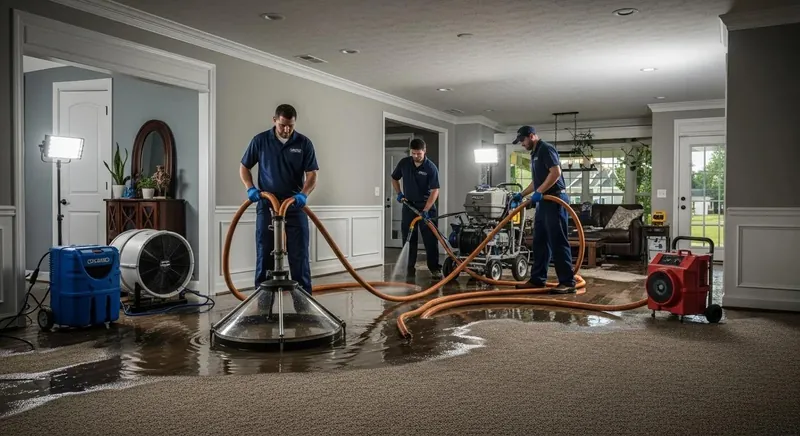
Extraction is the cheapest drying you can buy. Every gallon pumped out is a gallon no dehumidifier has to pull from the air over the following days.
How is standing water taken out, step by step?
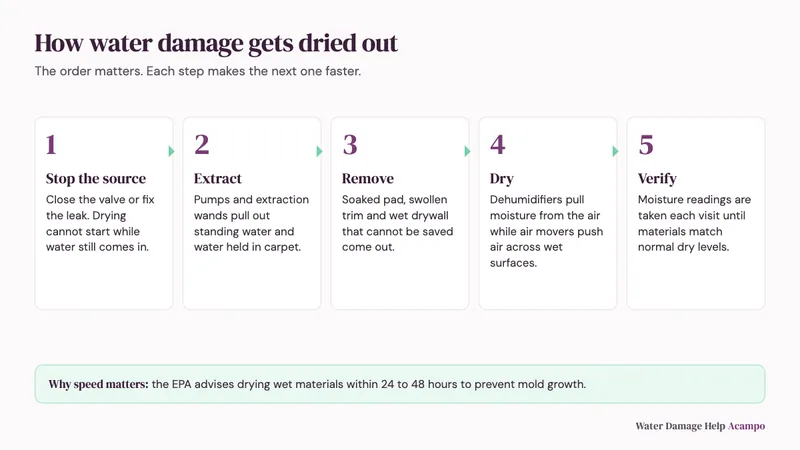
The sequence starts with safety and the source: power to the wet area goes off, the leak is stopped and the water category is identified. Then deep water is pumped, the remainder is extracted from floors, soaked materials come out and drying equipment goes in last.
- Make the area safe. Breakers feeding the wet room are switched off, ideally by someone standing on dry floor.
- Stop the source. Close a valve, call a plumber, or wait for flood water to stop rising.
- Pump the depth. A submersible pump handles several inches in a room or garage.
- Extract the rest. Wands and weighted tools lift water from carpet, pad and hard floors.
- Pull what holds water. Soaked pad, insulation and swollen baseboard come out so the frame can dry.
- Set equipment and log numbers. Readings are written down so each visit can be compared with the one before.
If your house has a concrete slab, water spreads across it and wicks into the base of the walls. If it has a crawl space, ask the provider to look underneath, since water can collect there out of sight.
Can soaked carpet, pad and wood floors be saved?
Often, when the water was clean and extraction began quickly. Carpet can sometimes be dried in place, but pad behaves like a sponge and is commonly replaced. Wood and laminate depend on how long they stayed wet and whether water got beneath them.
Solid and engineered wood cups as it absorbs moisture from below. Drying mats and dehumidifiers can flatten many floors if they start early, while a floor left wet too long may split or crown. Wait until it is fully dry before anyone sands a cupped board.
Laminate and vinyl plank trap water under the surface. A few planks can occasionally be lifted and relaid, but laminate with a swollen fiberboard core rarely recovers.
The CDC says soaked carpet and upholstery that cannot be dried promptly after a flood should be removed. Our wet carpet guide and floor repair guide go further.
Where else does water hide: attics, walls, garages and crawl spaces?
Anywhere you cannot reach with a wand. Water in an attic or wall cavity means tracing the source, removing wet insulation or drywall and drying what remains. A ceiling stain is often the first sign of a failure in an air handler, a water heater or a bathroom above.
Garages are worth a look as well, because a washer or water heater out there can leak and send water toward the house. If your home has a crawl space, check it after heavy rain, since San Joaquin County has an exceptionally high water table.
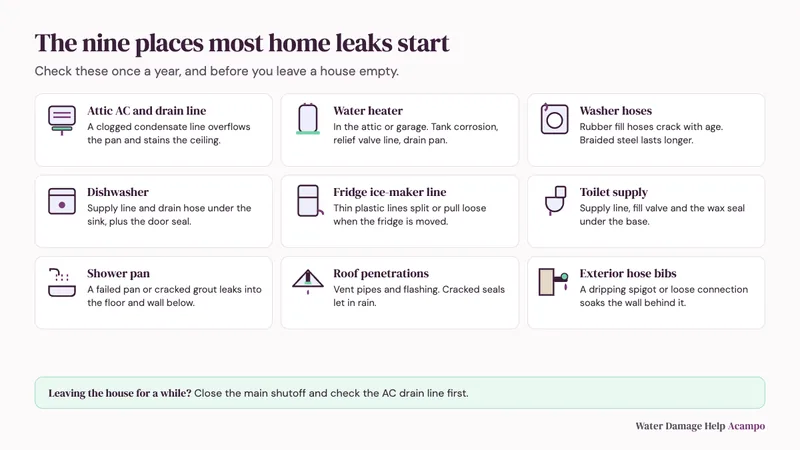
Typical sources have their own pages: AC leaks, water heater leaks and ceiling water damage, which explains how to drain a bulging ceiling safely.
How long does extraction take?
Most of the pumping happens on the first visit, and how long it lasts hinges on the volume of water and the number of rooms it reached. Drying afterward takes longer and varies by material. Restoration teams differ, so ask for an estimate for your own house.
For clean water, equipment commonly runs several days, and plaster, thick subfloors and wood take more. The EPA's 24 to 48 hour target is why extraction comes first.
Leaving equipment on is part of the job. Switching off dehumidifiers at night because of the noise stretches the whole timeline.
How much do national prices run for extracting water?
Fixr publishes national extraction prices by water type. They are averages from a national guide, not quotes for Acampo, and your provider sets its own rates. Use them only to judge whether an estimate sits in a sensible range.
| Water class | Where it comes from | Fixr price per sq ft |
|---|---|---|
| Clean | A broken supply line | $3.75 to $4.25 |
| Gray | A washing machine or dishwasher overflow | $4.10 to $6.50 |
| Black | Sewage or flood water | $7 to $7.50 |
Fixr's national range for whole-job water damage restoration is $1,200 to $5,000, averaging $3,000. The cost guide shows how the pieces add up.
Is renting a dehumidifier a substitute for professional drying?
A rental unit or a household dehumidifier can finish off a small clean spill after the mopping is done. It cannot draw water from pad, wall cavities or subfloors quickly enough for the EPA's 24 to 48 hour target. Whatever soaked in needs extraction before any drying equipment helps.
| DIY dehumidifier | Hired drying crew | |
|---|---|---|
| Fits | A small, mostly dry room | Wet carpet, walls, subfloors and outside water |
| Water removal | None, so start with a wet vac | Pumps and extractors take out the bulk first |
| Tracking progress | Guesswork without your own meter | Readings logged every visit |
| Claim records | Photos and receipts you gather | Logs and equipment lists to attach |
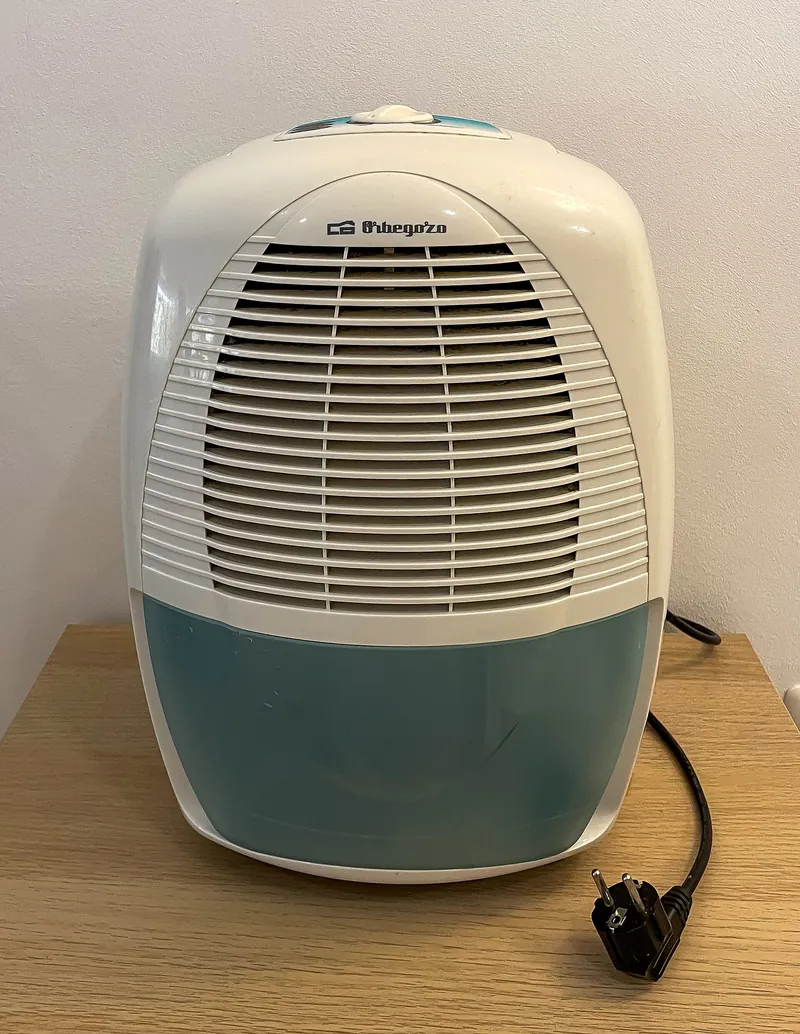

The EPA suggests keeping indoor humidity below 60 percent, ideally 30 to 50 percent. A cheap hygrometer shows your number. The rent or hire guide and structural drying page cover the details.
What are the signs that drying stopped too soon?
Drying has stopped too soon when the room smells musty, floors cup or go spongy, paint and baseboard blister, or readings stop dropping. Equipment should leave only once final readings equal those of dry material of the same kind. Ask to see the numbers.
- A stale smell that comes back when windows stay shut
- Wood floors that stay cupped, or laminate edges that keep lifting
- Paint that blisters, or drywall that gives under a finger near the floor
- A reading higher than a dry wall in another part of the house
Closing walls or laying new flooring over damp materials seals the moisture in and invites mold. If that has already happened, read mold after water damage.
Which questions should you put to a provider first?
Find out which category the provider assigns the water, what will be removed, how moisture gets measured and how the work is billed. Restoration teams differ on each point, so get the answers in writing before work begins. Five questions cover most jobs.
- What does this water category mean for my carpet and pad?
- Are readings taken at each visit, and will I receive copies?
- Which materials are you removing, and which will dry where they are?
- Will you bill from an insurer's price list, by the hour or with a flat quote?
- Who answers if the equipment sounds an alarm overnight?
For a longer checklist, see choosing a restoration company. If the water came from outside, read flood cleanup first.
Sources: IICRC S500 water categories; Fixr national cost guide; CDC mold and health page; EPA guidance on drying and mold; Wikipedia, San Joaquin County.