The short version
For water damaged floor repair in Acampo, stop the source, take up standing water and start drying in the first 24 to 48 hours, as the EPA advises. A hardwood floor hit by a clean leak has decent odds when the subfloor dries as well, laminate seldom comes back, and anything touched by flood water is usually removed.
Where do I start when my floor is soaked?
Stop the water, take up what is standing and start moving air across the surface. A floor can look fine an hour after a leak while the boards and the subfloor underneath stay soaked, so the first day decides how much of it survives.
- Find and stop the source. Shut the main valve, close the fixture stop or ask a plumber to repair the line. Drying cannot start while water keeps arriving.
- Cut power to the wet room at the panel, but only if reaching the panel means no walking through water.
- Photograph the floor first. Capture stains, raised edges, gaps and the source of the leak before anything moves.
- Pull off rugs, mats and boxes and put foil or plastic under the legs of wood furniture so stain does not transfer.
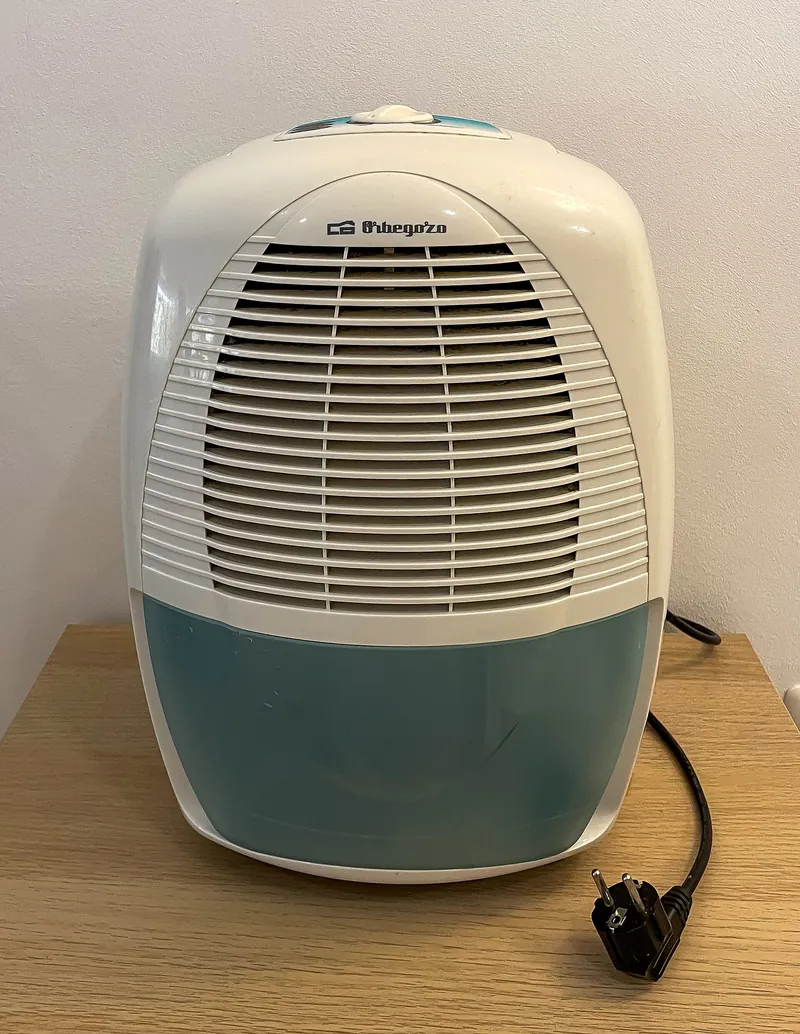
- Run fans and a dehumidifier, and keep heaters pointed away from the boards.
- Call your insurer, then call to reach a local water damage restoration team that dries floors.
Mold becomes a risk fast. The EPA's mold guide sets a target of 1 to 2 days for getting wet materials dry (24 to 48 hours). If a pipe split, the burst pipe page has the shutoff steps.
How do different floors respond to a leak?
Each material absorbs and releases water in its own way, and the flooring type is the largest single factor in whether a floor can be saved. Solid wood has the best odds when it is caught early. Laminate has the worst, and tile mostly protects itself while hiding trouble below.
| Floor type | What water does to it | Chance of saving it | Warning signs |
|---|---|---|---|
| Solid wood planks | Takes water in through the edges and underside, then swells and curls | Good after a short, clean wetting | Boards that lift at the ends, dark patches, a sour smell |
| Engineered wood | The glued layers can pull apart and the top veneer can lift | Fair after a light spill, poor after soaking | Bubbles, peeling top layer, edges that will not sit flat |
| Laminate | The fiberboard core drinks water at the joints and keeps its swollen shape | Low once the core is wet | Raised seams, crumbling edges, planks that no longer lock |
| Vinyl plank or sheet | The surface sheds water, but seams and edges let it reach the layer below | The vinyl often survives; the base is the worry | Curled corners, bubbles, trapped moisture, odor |
| Ceramic or stone tile | The tile is unaffected, though water slips through grout lines | High for the tile, uncertain for what supports it | Loose or hollow-sounding tiles, crumbling grout |
If you are unsure what your floor is, look at an edge near a vent or doorway. The plank construction is often visible there.
What do cupping, crowning and buckling mean?
They describe three ways a wood floor deforms as it takes on moisture. Cupping is a concave curve across a board, crowning is a raised middle, and buckling is a board that pulls free of the subfloor. Each tells you something different about where the water went.
Cupping usually means moisture arrived from below or the underside stayed wetter than the top. Crowning often appears after a cupped floor was sanded while still damp, or when the top dries faster than the bottom.
Buckling is the most serious of the three. Boards lift and peak because they swelled with nowhere to go, and a floor in that state usually needs sections replaced.
Wood also moves with the seasons, so a mild curve is not automatically a leak. A curve that appears right after a known wetting is the one to take seriously.
Can a wet hardwood floor be saved?
Often yes, when the water was clean, the floor was dried quickly and the subfloor dried with it. A supply-line leak caught in a day or two gives the best odds. Contaminated water, long soaking or black staining point toward replacement instead.
Three questions sort most floors. What kind of water was it, how long did it sit, and did it get under the boards? The IICRC S500 standard sorts water by how dirty it is. A split supply line sits in the cleanest group, a washer or dishwasher discharge in the middle, and sewage or river overflow in the worst.
Providers use specialty drying mats or panels to pull moisture up through hardwood, which is something a household fan cannot do. A floor that is gently drying and shows no new movement after a few days is on a good path. Ask the team you reach whether they handle hardwood drying or only carpet and walls, since services differ.
How do I know when the floor is dry?
A moisture meter reading is the only reliable answer. A floor can feel dry to the hand while the lower boards and the subfloor still hold water, and that hidden moisture is what causes mold, cupping and failed refinishing later.

Readings should be taken at several spots and compared with a dry area of the same floor, and then repeated over several visits. For the room air, the EPA suggests staying under 60 percent relative humidity, with 30 to 50 percent as the ideal range. An inexpensive humidity meter lets you watch that yourself.
Do not sand, seal, stain or lay new flooring over a floor until readings show it has dried. Finishing early traps moisture, and that is how crowning and a musty smell begin.
What happens to laminate and vinyl after a leak?
Laminate rarely recovers once water reaches the core, while vinyl plank often does if the water is removed quickly. The difference is the material under the surface layer. Fiberboard swells permanently, whereas vinyl is plastic that does not absorb water.
With laminate, look at the seams. If they are raised, soft or flaking, the planks need replacing. Even a few damaged planks usually mean pulling up a larger run to reach them, because laminate locks together plank to plank.
Vinyl planks can often be lifted, the base dried, and the same planks put back. Sheet vinyl is harder, since it may be glued down. The thing to watch with both is water sealed under the surface, which breeds mold and odor without showing anywhere. If the floor smells musty, the layer below is wet.
Can groundwater or moisture come up from below in San Joaquin County?
It can in principle. Wikipedia describes San Joaquin County as a very flat basin with an exceptionally high water table that tends to flood in spring with Sierra snowmelt. Moisture from the ground can matter for floors near Acampo, Lodi and Woodbridge.
The way it reaches a floor depends on how the house is built, and that is not documented for Acampo. If your house has a crawl space, wet ground or a leaking vent can add moisture under the boards. If it sits on a concrete slab, moisture can wick up through it into flooring laid directly on top.
Signs include flooring that cups with no leak above it, a musty smell near exterior walls, and damp patches that return after drying. A plumber or moisture specialist can tell a pipe leak from groundwater. Homeowners policies treat the two differently, as covered below.
Can water get trapped under the flooring?
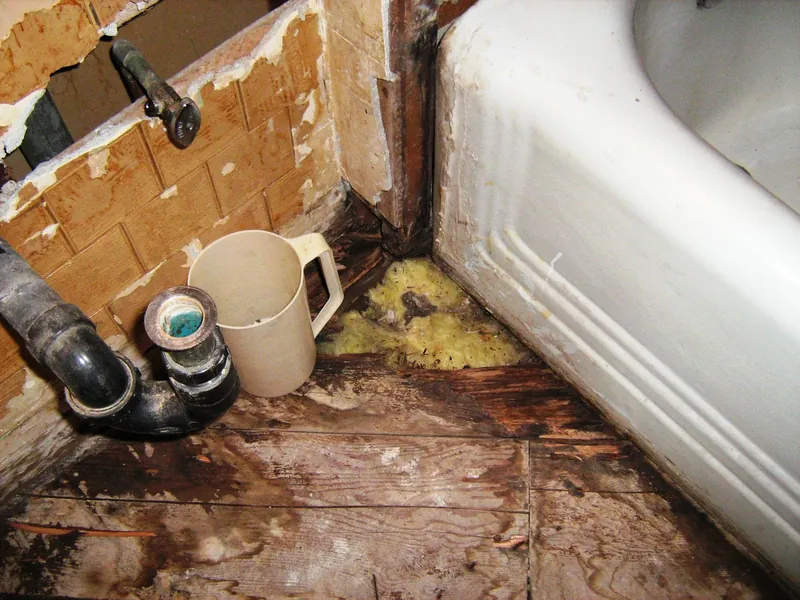
Yes, and it is a common reason a floor fails weeks after a leak. Water travels under planks, into the subfloor and along the underlayment, then stays there because nothing lets it out. The surface can look normal while the layers below stay wet.
Plywood and particleboard subfloors swell and lose strength when they stay damp. A floor that feels soft or springy underfoot is a sign to test the subfloor before new flooring goes down.
A restoration provider may lift a few boards or drill small access holes to dry the cavity, and sometimes removes a row of planks along a wall. If the floor is a glued or nailed type, ask how they plan to reach the space under it. If you are comparing methods, see structural drying and the water damage repair page for how drying and repairs fit together.
What if flood or storm water reached the floor?
Treat it as contaminated. Rising water from rivers, streams or runoff is Category 3 under the IICRC, which means porous flooring that got wet generally has to come out. The CDC likewise urges pulling out soaked carpet and upholstery that cannot be dried promptly.
Standing flood water is also a safety issue. Ready.gov warns to avoid wet electrical equipment, stay out of standing water and keep children away from cleanup. Wear heavy gloves and boots.
Winter storms and atmospheric rivers drive most large water events in California. Near the Mokelumne River, flood-control dams sit upstream of Lodi, but runoff and roof leaks still enter homes. See the creek and river flooding page and the flood cleanup page for the rest of the process.
Dry it or tear it out: how do I decide?
Replace it when the water was contaminated, the damage is structural or the floor stayed wet long enough to rot or grow mold. If boards are black, soft or buckled, or the subfloor crumbles under a probe, drying alone will not fix it.
| What you see | Usual direction |
|---|---|
| Clean leak, fast action, solid wood | Dry it, then check that it lies flat |
| Wet for a long time from below, with dark stains | Plan for replacement and a subfloor inspection |
| Laminate seams that have lifted | Replace the affected planks |
| Sewage or flood water on porous flooring | Remove it; see sewage backup cleanup |
A repair that touches only one area can sometimes leave the rest alone. The hard part is matching the old floor, since finish and color age differently. For mold concerns, see mold after water damage.
What do floor repairs tend to run?
Published national figures put hardwood restoration at $10 to $15 per square foot and carpet at $4.75 to $10.50, according to Fixr. Those are averages gathered across the country, not quotes, and local prices differ. Ask a provider for a written estimate.
Bob Vila reports $200 to $500 to restore floors in its own overall cost guide, which shows how wide the spread is. The gap between a dried floor and a replaced one is large. Subfloor work, finish matching and the size of the area all move the total.
California rules matter here. CSLB says an unlicensed person may do work up to $1,000 total, labor and materials, only if they do not hire workers and no permit is needed. CSLB also warns against paying more than 10 percent of the contract price up front.
Providers set their own prices, so confirm directly. For the full picture see water damage restoration cost.
Will my California policy pay for a ruined floor?
Often, when the water came from a covered source such as a split pipe or an appliance. The state insurance department explains that flood is excluded from homeowners policies while other water damage is covered. Read your own policy, since terms vary.
The NAIC adds that damage from ground water, rain runoff or snowmelt is typically not covered, which matters in a county with a high water table. Mold is often excluded as well.
Document the floor before anything is removed, and keep receipts for temporary protection. Under 10 CCR 2695.5 and 2695.7, an insurer has 15 calendar days to acknowledge your claim and then 40 calendar days from proof of claim to accept or deny it. Stuck? CDI runs a consumer hotline at 1-800-927-4357.
See water damage insurance claims and flood vs homeowners insurance.
Sources: EPA, Brief Guide to Mold, Moisture and Your Home; IICRC S500; CDC, About Mold and Your Health; Ready.gov, Floods; Fixr, Water Damage Restoration Cost; Bob Vila, Water Damage Restoration Cost; California Department of Insurance, Residential Property Claims Guide; 10 CCR 2695.7; CSLB, Handyperson Exemption; NAIC, Homeowners Insurance; Wikipedia, San Joaquin County.