The short version
Preventing water damage in Acampo, CA comes down to habits: test the main shutoff, keep the AC drain open, inspect the water heater and hoses each season, prepare the roof and gutters for winter storms, and settle flood coverage long before the wet season.
How do I prevent water damage in my Acampo home?
Start by learning where the main shutoff is. Then go through the parts that fail most: hoses, the water heater, the air conditioner drain and the roof, and plan for winter storms and high groundwater. Nearly every big loss starts as a small one, and a short routine catches it early.
Upkeep also shapes what insurance pays. Triple-I notes that policies exclude damage from poor maintenance, leaving repairs to the owner, so a sudden failure is easier to claim than a drip nobody fixed.
Claims like these are routine: Triple-I counts roughly one in 60 insured homes filing for water damage or freezing each year.
How do I find and test the main water shutoff?
Look near the point where the water line enters the house, which may be an outside wall, a utility closet or the garage. Do this while nothing is leaking. A valve that is blocked or stuck is no help during an emergency, so exercise it twice a year.
- Find the valve and move whatever is piled around it.
- Close it all the way. A lever lies across the pipe when closed, and a round handle turns clockwise.
- Run a tap to be sure the flow has stopped.
- Open it again slowly and check the stem for seepage.
- Label it so anyone in the household can locate it quickly.
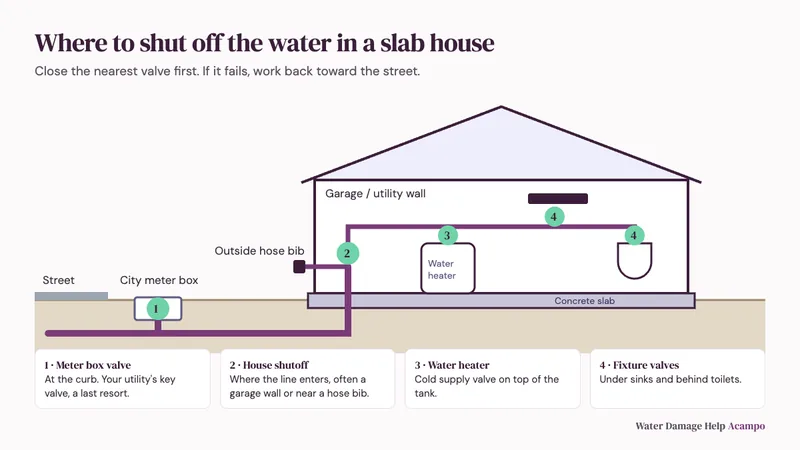
A valve that will not budge should not be forced. Have a plumber replace it before you need it.
Do the small valves at sinks and toilets matter?
Yes. Every fixture has its own stop valve, so you can contain one leak without cutting water to the whole house. These small valves seize when unused, so turn each gently once or twice a year and watch the stem for drips.
A valve that weeps, sticks or shows corrosion should be replaced. That is a short plumbing visit compared with the damage from a failed line.
Glance at the flexible supply lines while you are at it. Cracks, bulges, rusty fittings or a damp cabinet floor mean one needs replacing soon.
How do I protect pipes before a cold snap?
Start with the pipes the American Red Cross lists as most exposed: supply lines in unheated crawl spaces, attics, garages and kitchen cabinets. Insulate what you can reach, and let room warmth reach the rest by opening cabinet doors on outside walls.
Wikipedia describes Lodi's winters as cool and wet. We have no record of how often a hard freeze reaches Acampo, so this is a plan for the cold snap you hope never comes.
- Disconnect garden hoses and cap outdoor spigots.
- Wrap bare pipes in an attic, garage or crawl space if your house has one.
- Prop open cabinets on outside walls.
- Leave a trickle of cold water running at a tap on an exposed line, per the Red Cross.
- Hold the thermostat steady night and day.
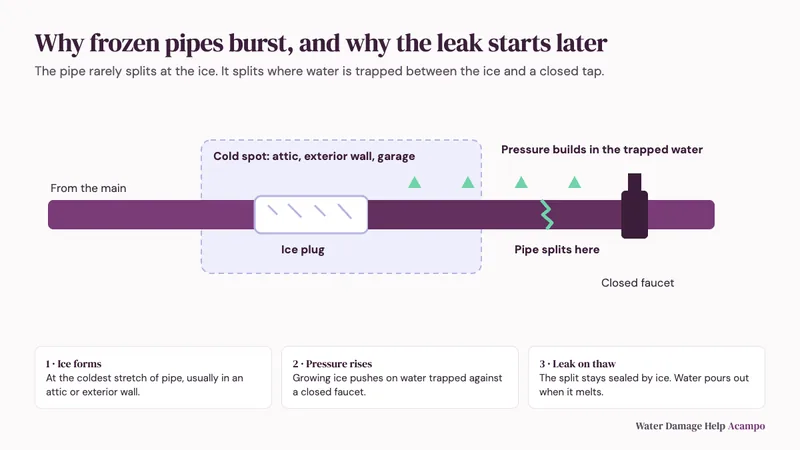
The burst pipe guide explains what to do if a pipe freezes or splits.
What if nobody will be home during cold weather?
You have two choices: keep the house warm or drain it. Per the Red Cross, a heated home should stay at 55 F or above with the thermostat steady and a drip at faucets on exposed pipes. The alternative is closing the main and emptying the lines before you leave.
Ask someone to check on the place. A leak in an empty house can run unnoticed, and some policies attach conditions to vacancy, so read yours.
How do I get the house ready for winter storms?
Inspect the roof, gutters, downspouts and yard slope before the wet season starts. NOAA reports that roughly 30 to 50 percent of yearly precipitation in the West Coast states arrives in a handful of atmospheric river events, which means weak drainage gets tested all at once.
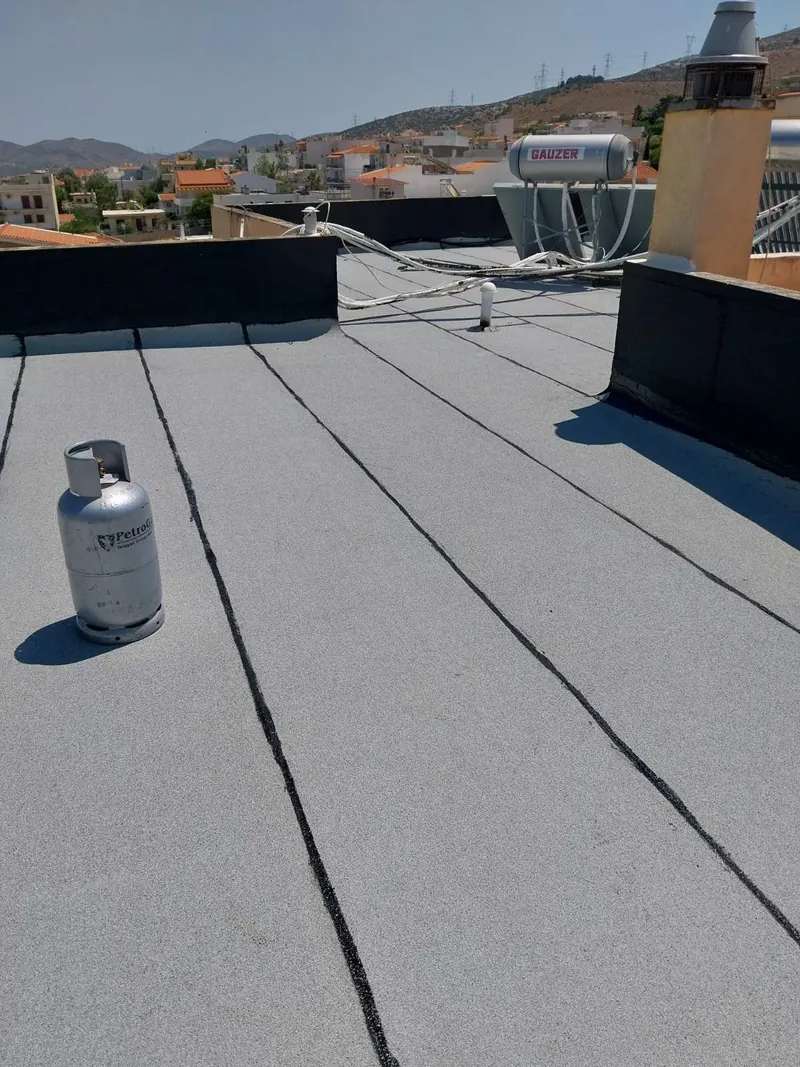

- Empty the gutters and point downspouts well clear of the walls.
- Scan for lifted shingles, cracked flashing and gaps at vents and skylights.
- Grade soil away from the house and keep planters from pooling water against it.
- After the first heavy storm, look at ceilings and window corners for new stains.
The atmospheric river prep page goes further. A roof failure is covered on the roof leak page.
How do I care for the AC drain line and air handler?
Keep the condensate line open and the pan dry. A cooling system wrings moisture out of the air and sends it down a drain, and when that drain clogs, the pan spills into a ceiling or wall. ENERGY STAR suggests a yearly contractor visit and a monthly filter check.
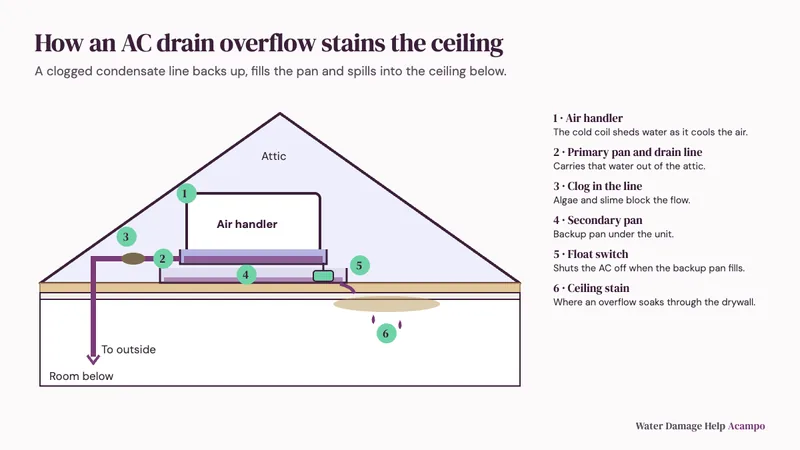
In its maintenance checklist, ENERGY STAR says a plugged drain can cause water damage and affect humidity. Summers around Lodi are hot and dry, so the system works hardest when a clog is easy to miss.
- Have the technician clear the drain line at the annual visit.
- Ask whether a float switch sits in the pan.
- Peek under the air handler for water or rust whenever you swap the filter.
If the pan has already overflowed, the AC leak page picks up from there.
Which water heater, hose and appliance parts wear out first?
The water heater, washer hoses, dishwasher line, refrigerator line and toilet supply lines wear out while installed, and a failure under pressure releases a lot of water. Look at each of them twice a year for rust, bulges, cracks and damp spots, and replace anything that looks tired.
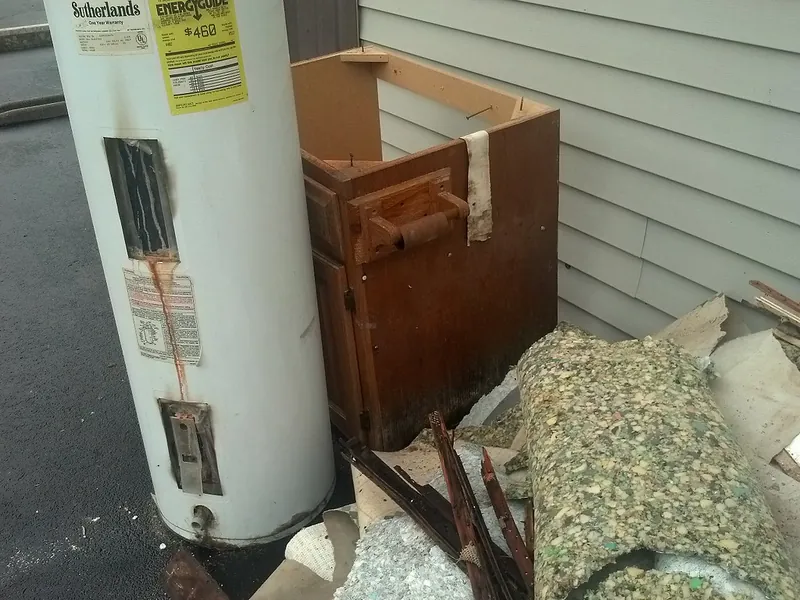
- Water heater: rust at the base, wetness near the relief valve or drips at the fittings all matter. See the water heater page.
- Washer: replace hoses that bulge or look worn, and shut the valves when you travel.
- Dishwasher and refrigerator: slide the unit out and inspect the line and the floor behind it.
- Toilets: a damp floor or a rocking base points to a worn seal or supply line.
Health and Safety Code section 19211 requires residential water heaters to be braced, anchored or strapped against earthquake motion. A plumber can confirm yours is secured.
Is a leak sensor or an automatic shutoff valve worth buying?
Often, yes. A sensor raises an alarm when it gets wet, while an automatic shutoff valve closes the main by itself. The right choice depends on how often the house sits empty. A plumber can say what fits your plumbing, and neither device replaces checking the parts above.
- Set sensors under the heater, behind the washer, beside the dishwasher, in the AC pan and near toilets.
- Swap sensor batteries along with smoke alarm batteries.
- Send alerts to a phone you actually watch.
- Consider an automatic shutoff if you travel a lot.
How do I protect my home from flooding and high groundwater?
Steer runoff away from the house, learn whether your address sits in a mapped flood zone, and buy flood cover before you need it. Standard homeowners policies exclude flood, and the NAIC says damage from ground water, rain runoff or snowmelt is excluded as well.
San Joaquin County is a very flat basin with an exceptionally high water table, and it tends to flood in spring with Sierra snowmelt runoff, according to Wikipedia. The Mokelumne River runs past Lodi, a few miles from Acampo.
According to the California Department of Insurance, a flood policy begins 30 days after it is bought, apart from some lender-required cases, so buy ahead of the wet season. FEMA says most homeowners insurance does not cover flooding.
Read the river flooding page and the flood versus homeowners insurance page for the details.
What is a good yearly maintenance calendar?
One short check per season catches most common causes. This calendar follows a hot summer and a wet winter, as described for the Lodi area. Adjust it for the age of your house and where the heater and air handler sit.
| Season | What to check | Why |
|---|---|---|
| Spring | AC drain line, grading, downspouts, flood coverage | Snowmelt can raise groundwater, and cooling season is about to start |
| Summer | Air handler pan, appliance hoses, sensor batteries, humidity | Hot weather keeps cooling systems running and drain lines clogging |
| Fall | Roof, flashing, gutters, water heater, insurance review | Fix weak points before the first big storm |
| Winter | Pipe insulation, spigot covers, vacant-home plan, attic stains | Storms test the roof, and a cold snap can split trapped pipes |
The EPA recommends relative humidity under 60 percent, ideally 30 to 50, to keep damp spots from becoming mold.
What if a leak starts despite all this?
Cut the water, stay safe, then record the scene. Speed counts because the EPA calls for drying wet areas and belongings in 24 to 48 hours to head off mold. These steps fit most leaks, from a drip under a sink to a soaked floor.
- Shut the closest valve or the main.
- Turn off power to wet areas only if you can reach the panel dry.
- Take photos following the photo checklist.
- Report it to your insurer. Triple-I says to limit further damage, hold off on large permanent repairs until the adjuster has looked, and keep receipts.
- Phone a plumber for the source and a restoration provider for wet materials. See emergency water damage help.
Sources: American Red Cross, Frozen Pipes; NOAA Research, Atmospheric Rivers; ENERGY STAR, Maintenance Checklist; Triple-I, Which disasters are covered; Triple-I, Facts and Statistics; Triple-I, Settling insurance claims; NAIC, Homeowners Insurance; FEMA, flood insurance; California Department of Insurance, Flood Insurance Resources; California Seismic Safety Commission, Health and Safety Code 19210-19217; EPA, brief guide to mold and moisture; Wikipedia, San Joaquin County; Wikipedia, Lodi.