The short version
You can rent a dehumidifier for water damage when the spill is small, the water was clean and you dried it quickly. Hire a pro when water reached walls, pad or subfloor, sat for days, or was sewage or flood water. The EPA says to dry wet areas in 24 to 48 hours.
Can I rent a dehumidifier instead of hiring a pro?
For a small, clean-water spill that you caught fast, often yes. For anything that soaked into walls, floors or carpet pad, or that involved sewage or flood water, a rented unit is rarely enough. The deciding factors are how much got wet, how long it sat and what kind of water it was.
A dehumidifier pulls moisture from the air. It does not pull water out of a wet wall cavity, and it does not tell you when the structure is dry. That is why a quick rental can look like it worked while damp material stays behind.
This site is an information resource, so the advice here is general. Restoration teams differ in what they do, so confirm directly what any team will do before you agree.
What does a dehumidifier actually do after a leak?
It lowers the humidity of the room so wet materials can release moisture into the air. The California Department of Insurance notes that drying wet spots and running a dehumidifier lowers the odds of mold following a leak. It works best on a small area, with the water already gone.
The EPA's moisture guide asks for indoor humidity below 60 percent, with 30 to 50 percent as the ideal, and lists air conditioners and dehumidifiers among the ways to get there when needed. A cheap humidity meter, which the EPA prices at $10 to $50, tells you whether the room is heading the right way.
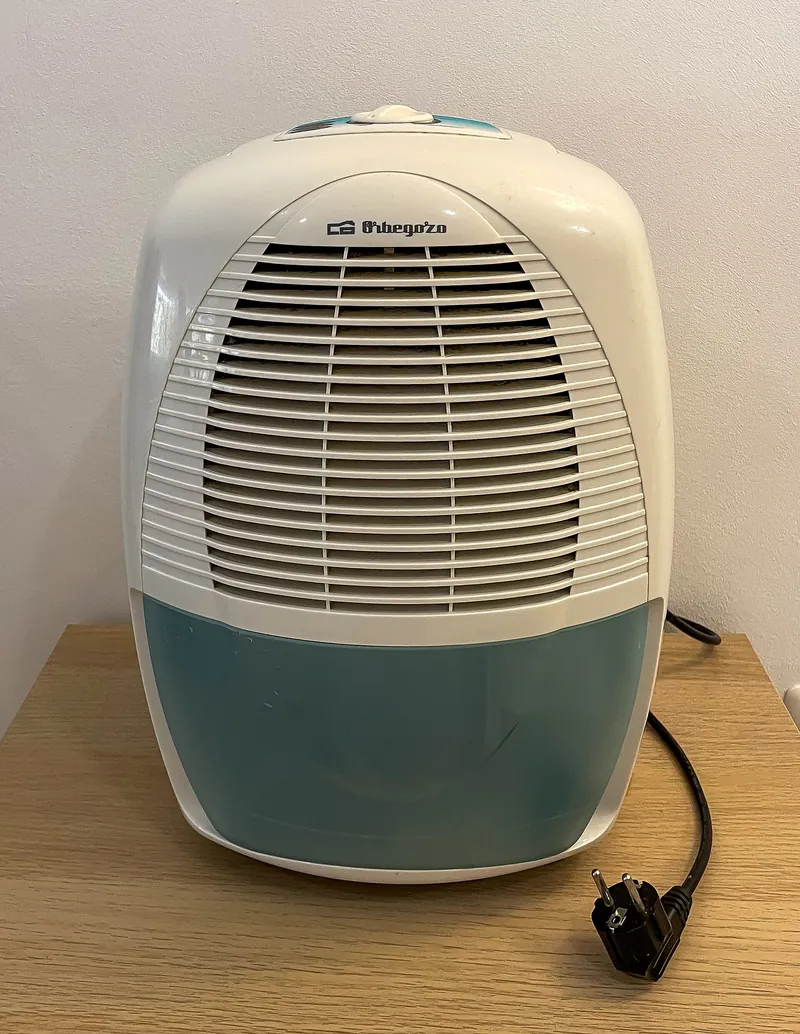

Humidity in the air is only half the picture. Wet drywall, baseboards and subfloor can hold moisture long after the air feels dry, which is the gap a pro's meter is meant to close.
When is a rented dehumidifier enough?
When the water was clean, the wet area is small, and you removed the water and soaked items quickly. A shower overflow that wet one bathroom floor, or a spill on a hard surface, can fit. Check the room over the next few days to confirm that the damp spots are shrinking.
- Clean water only. A supply line or sink overflow, not sewage or flood water.
- One small area. A patch of floor, not a whole room of carpet.
- Hard surfaces. Tile, sealed floors and finished surfaces that wipe dry.
- Caught fast. The EPA's target is to dry wet areas and items in 24 to 48 hours.
- No musty smell. A smell means something is still damp.
Even then, plan to watch the area. If the stain spreads or the smell grows, stop treating it as a rental job. Our page on signs of water damage lists what to watch for.
When should I hire a professional instead?
Hire one when water reached walls, insulation, carpet pad or subfloor, when it sat for more than a day or two, when the source was sewage or flood water, or when you cannot find where the moisture is going. Those jobs need equipment and readings, not just dry air.
| Situation | Rented unit | Professional help |
|---|---|---|
| Small clean spill on a hard floor | Often enough | Not usually needed |
| Wet carpet and pad in one room | Risky. Pad holds water | Worth a call. See wet carpet drying |
| Water inside a wall or ceiling | Cannot reach it | Needed. Meters find the wet spots |
| Sewage or flood water | Not appropriate | Needed. Contaminated water calls for a trained provider |
| Wet for more than two days | Mold may already be growing | Recommended |
See wet carpet drying for the carpet row and sewage backup cleanup for the fourth.
Why do pros use more than a dehumidifier?
Drying a structure involves moving air, controlling humidity, finding hidden moisture and checking readings until materials are dry. Professionals bring air movers and meters in addition to dehumidifiers. The IICRC S500 framework behind professional drying starts from water type. The goal is a dry structure, not a dry room, and that takes measuring rather than guessing.
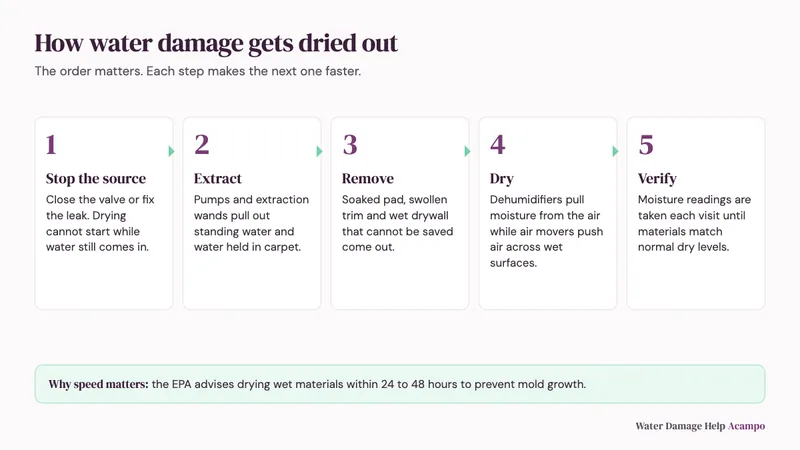
Our structural drying page explains each piece of equipment. A homeowner can rent some of these tools, but without readings there is no way to know when to stop. The usual mistake is turning the unit off too soon because the air feels dry.
Ask any provider how they will check that the job is finished and whether they will share the readings. Restoration teams differ on this, so ask up front.
What does renting versus hiring cost?
We do not have a sourced rental price for the Acampo area, so we will not quote one. Rental shops post their own rates, so call two or three. For professional work, the only sourced figures here are national ranges from Fixr, and they are not local quotes.
Fixr's cost guide splits national flat ranges by damage class, running from $150 to $400 for Class 1 up to $1,000 to $3,000 for Class 3, with $500 to $1,000 in between for Class 2. Overall, Fixr puts water damage restoration at $1,200 to $5,000 nationally, with an average of $3,000.
Prices in California can differ, and providers set their own, so confirm every figure directly. Our restoration cost guide covers what drives the price. A cheap rental that fails to dry a wall can cost far more once mold or rot sets in.
What happens if I rent a unit and the wall stays wet?
Moisture stays in the material and mold can grow. The EPA says mold usually does not grow if wet materials dry in 24 to 48 hours, which makes the first two days the window that matters. A damp wall that sits past that window deserves a closer look.
Hidden mold turns up inside walls around leaking pipes, behind furniture, in ductwork and above ceiling tiles, according to the EPA. A musty smell with a dry-looking room is a clue that moisture is still inside something.
Do not paint or caulk over moldy surfaces, the EPA adds. If you see spreading mold, read mold after water damage, and call a provider for anything larger than a small patch.
How do I use a rented dehumidifier safely?
Close the room, keep the water tank or drain line managed and keep the unit's intake clear. A dehumidifier works best in a closed space, so shut doors and windows while it runs. Empty the tank often or use the drain hose so the unit does not shut off with a full bucket.
- Stop the source first. Fix the leak or shut off the water, or the unit fights a losing battle.
- Remove standing water and soaked items. Remove wet rugs and carpet that cannot dry quickly.
- Close the room and place the unit where air can reach wet surfaces.
- Plug it into a dry, working outlet. Never run cords through standing water.
- Check humidity with a meter and aim for 30 to 50 percent.
- Keep checking for days. Press on walls and baseboards and smell the room.
Keep children and pets away from the cord and the exhaust. Our guide to kids and pets during cleanup covers that.
Does insurance pay for a rented dehumidifier?
It might, if the water damage itself is covered, but you should ask your agent before you rent anything. Keep the receipt either way. Triple-I suggests limiting further harm to the property and keeping receipts so spending can be submitted for reimbursement.
The state insurance department's claims guide separates flood, which homeowners policies leave out, from other water damage, which they cover, and tells owners to track down and stop the leak early. Coverage depends on your policy and the cause, so ask your agent.
Photograph the wet area and the equipment before you start. Read water damage insurance claims for the steps and the California claim deadlines, and the photo checklist for what to capture.
How do I decide between renting and calling someone?
Ask three questions: Was the water clean, how much got wet, and has it been more than a day or two. If any answer points to hidden or widespread moisture, make the call. A short assessment can save you a repeat job. If all three point to small and fresh, a rental plus careful checking can be reasonable.
When in doubt, ask a provider to assess first. Many providers will explain what they would do, and you can decide after. Restoration teams differ, so confirm directly whether there is a charge for the visit. Our choosing a restoration company guide lists questions to ask.
The state site, Water Damage Cleanup California, has more on how restoration works across the state.
Sources: EPA guide to moisture in the home; EPA page on cleaning up mold; California Department of Insurance, Residential Property Claims Guide; Fixr cost guide; Triple-I on settling claims; IICRC S500 water categories.