The short version
Spreading stains, a damp odor, blistered paint, lifting floors and mushy drywall are the main signs of water damage in Acampo, CA. A spot that keeps changing means the leak is live. Close the water supply, take photos, then ask a plumber to trace the source and a restoration provider to handle wet materials.
What are the signs of water damage in an Acampo home?
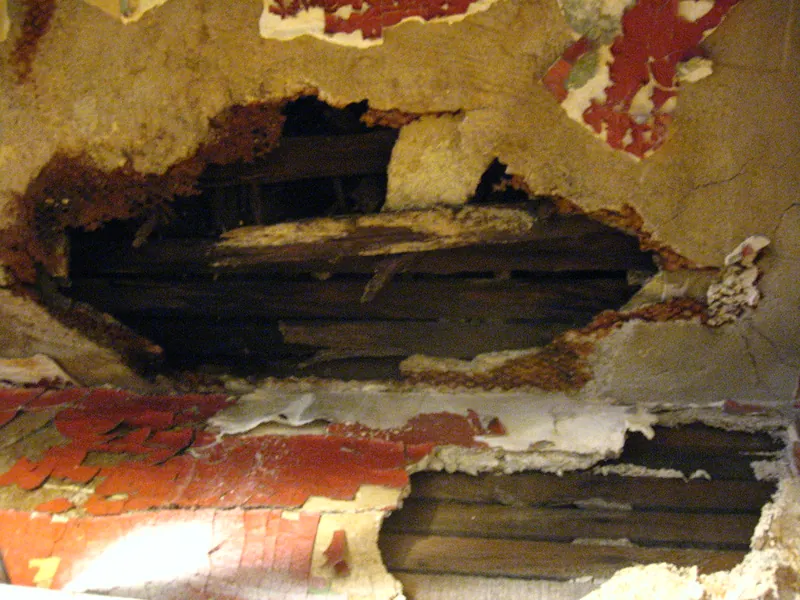
Look for spreading stains, a damp odor, blistered paint, flooring that lifts or cups, and drywall that feels soft to the touch. A single sign can have an innocent explanation. A cluster of them, or one that changes from week to week, suggests water is still getting in somewhere nearby.
- Stains that look tan, amber or gray and may have a darker outline.
- Odor that recalls a wet towel or a cellar, worst in a room kept shut.
- Finish problems such as lifting wallpaper, chalky white crust on masonry or rust spots on metal.
- Swelling of baseboards, open seams in flooring and doors that start to bind.
- Noise from a drip or a trickle while nothing in the house is in use.
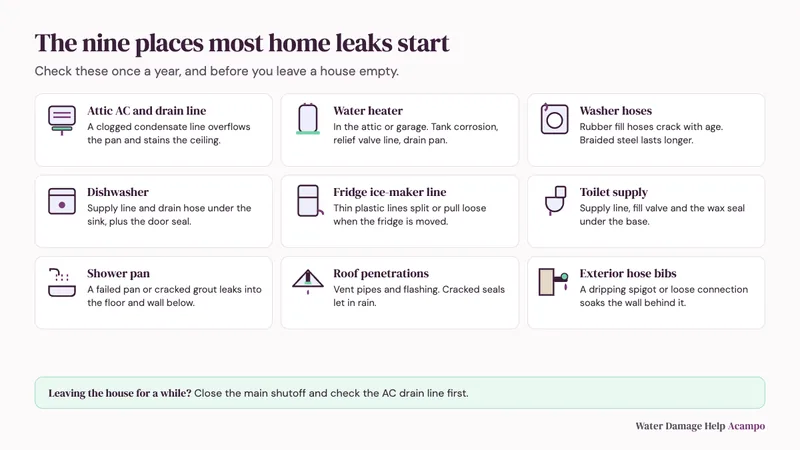
The usual culprits apply to a house in Acampo as anywhere else: a tired supply line, a plugged air conditioner drain, an aging water heater, or a roof that lets in winter storm rain.
How do I spot water damage that is hidden inside walls and floors?
Concealed damage announces itself through small clues some distance from the actual leak, such as a pale stain, an odor you cannot place, or a floor with a slight give. The water itself sits in a wall cavity, beneath flooring or above a ceiling, out of view.
Weeks of hidden leaking is a problem because of the EPA's guidance on drying wet areas and belongings in 24 to 48 hours to head off mold. A slow leak blows far past that window.
Quiet leaks are common. The Insurance Information Institute puts the rate at about one in 60 insured homes with a yearly claim for water damage or freezing.
Take a flashlight through the house, pressing lightly on the bottoms of walls, the floor of each sink cabinet and the edges of flooring. Anything soft or cool deserves a second look.
Which signs show up in which room?
Where a sign appears narrows down where to look. Kitchens and bathrooms tend to leak at fixtures, laundry areas at hoses, and ceilings at whatever runs above them. The table pairs what you see with a likely cause and a reasonable next step.
| Room | What shows up | Probable cause | Next move |
|---|---|---|---|
| Kitchen | Swollen cabinet floor, mushy spot near the dishwasher, damp odor inside the cabinet | Sink supply or drain, dishwasher hose, icemaker line | Clear the cabinet, check for drips, then ask a plumber |
| Bathroom | Spongy floor around the toilet, loose tile, a stain on the ceiling underneath | Toilet seal, shower pan, tub seal or a supply line | Stop using the fixture and call a plumber |
| Laundry area | Wet floor, rusty hose fitting, discolored wall | Washer hose, standpipe or a water heater close by | Shut the washer valves, then replace the hose |
| Ceiling | Brown patch, sag, drips after rain or while the AC runs | Roof leak, AC drain line or a pipe above | Read the ceiling page |
| Garage or utility closet | Pooled water by the heater, rusting tank base, damp drywall | Tank, relief valve or the connections to it | See the water heater page |
How can I tell an active leak from an old stain?
A live leak feels cool and damp, has a blurry edge and shifts from one day to the next. An old stain is dry and firm with a crisp outline that never moves. To test it, trace the edge in pencil, write the date beside it, and compare after rain or a day of ordinary water use.
| Check | Active leak | Old, dried stain |
|---|---|---|
| Touch | Cool, damp or soft | Dry and firm |
| Edge | Blurry, spreading | Sharp ring, sometimes several |
| Over a few days | Larger or darker | Unchanged |
| Smell | Fresh and damp | Stale, or none |
A dry stain does not prove the trouble is over. The next storm can bring water back, so look again in wet weather before painting over it.
Could a leak under the floor explain what I am seeing?
It might. When a house sits on a concrete slab, a pressurized pipe underneath can leak with no water in sight. A warm patch on the floor, a faint rushing sound, damp flooring and a water meter that keeps turning with everything off all point toward that.
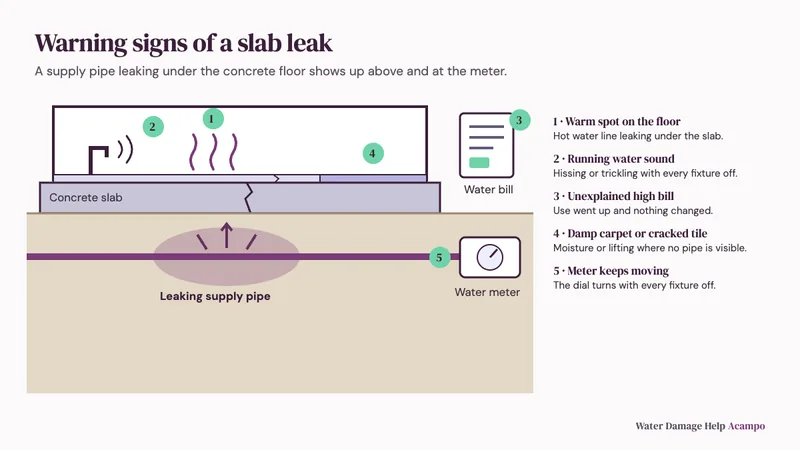
Nothing on file tells us what your foundation is, so check your own first. If your house has a crawl space, a leaking pipe there tends to show as wet insulation, a sagging subfloor or a musty odor drifting up through the floor. The slab leak page walks through the meter test, and a jump in the water bill is another reason to run it.
What does a clogged air conditioner drain look like?
Expect a stain or drip on the ceiling or wall near the air handler, a full pan, or a puddle beside an indoor unit. The condensate line carries off the moisture the system pulls out of the air. Once it clogs, the pan fills and spills into the house.
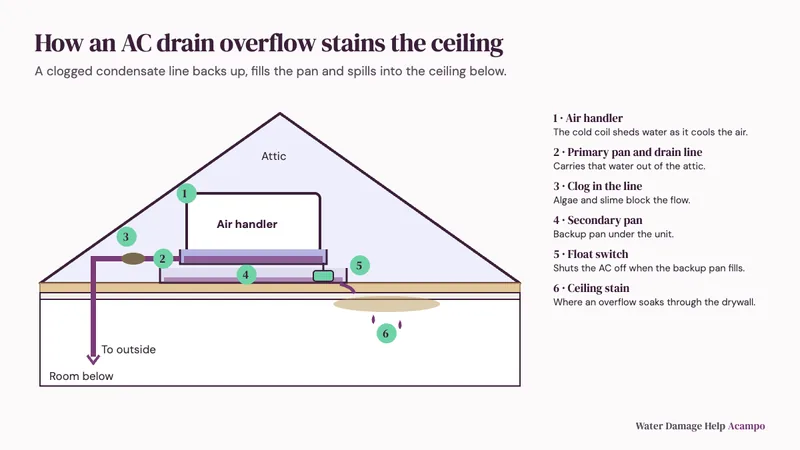
Nearby Lodi is described as having hot, dry summers in its Wikipedia entry, which keeps cooling systems busy. ENERGY STAR notes that a plugged condensate drain can damage the house and raise indoor humidity.
Is high indoor humidity a sign of water damage?
Sometimes. Beads of water on windows, walls or pipes mean the indoor air is holding more moisture than the house sheds. The EPA recommends relative humidity under 60 percent, ideally 30 to 50 percent, and says a small meter costing about $10 to $50 will measure it.
High humidity is not damage by itself, but a reading that stays high near one wall or in one room can mark a hidden source. Dryers and stoves should vent outdoors, and bathroom fans should run during showers.
Mold is the follow-on risk. Per the CDC, it can cause a stuffy nose, sore throat, coughing or wheezing and burning eyes, with stronger reactions in people who have asthma or a mold allergy. The mold guide explains when a patch is a job for you.
What do these signs mean if I rent in Acampo?
California treats dampness and visible mold as possible grounds for calling a rental substandard. Health and Safety Code 17920.3 names dampness of habitable rooms and visible mold, apart from minor mold where surfaces normally get wet, and the owner must fix them. Report what you see in writing and keep a copy.
This matters locally: the 2020 census recorded 28.4% of Acampo's occupied homes as renter-occupied. The California Department of Public Health booklet for renters names visible mold, mold odor, visible water damage and damp materials as signs, and gives stains, peeling paint, warped floors and rotting wood as examples of the damage.
Dated photos help if a dispute follows. The renters and landlords guide sorts out who handles what.
Do I call a plumber or a restoration provider?
A plumber handles a pipe, fixture or appliance that is still leaking. A restoration provider handles whatever got wet. Many jobs need both, plumber first, since drying a wall under a dripping pipe is wasted effort. Restoration teams differ in what they take on, so ask each one directly.
| Situation | Who to call | First move |
|---|---|---|
| Dry stain that has not changed | Nobody yet | Outline it, recheck in rain, refinish once you know it is dry |
| Slow drip, running toilet or a turning meter | Plumber | Close the nearest valve or the house shutoff |
| Soaked carpet, mushy drywall, bowed ceiling or standing water | Restoration provider | Shut off supply, photograph, then phone |
| Sewage, a backed-up drain or flood water from outside | Restoration provider, stay out | See the sewage backup page |
For damage from sewage or other contaminated water, the EPA says to bring in a professional with experience in such buildings. The IICRC S500 standard puts sewage and rising flood water in Category 3, its most contaminated class.
What should I do in the first hour after I spot a sign?
Cut off the water, keep yourself safe and record the scene before moving things around. Insurers want photos and receipts, and a clear record helps a restoration provider judge how far the water traveled. The same steps fit most signs, from a growing stain to a wet floor.
- Close the water supply at the fixture valve or the house shutoff. Switch off power to wet rooms only when the panel is reachable from dry footing.
- Record the damage in photos and video from different angles, using the photo checklist.
- Clear the area of belongings and raise furniture off wet carpet.
- Notify your insurer. Triple-I says to protect the property from more harm, wait on big permanent repairs until the adjuster has seen it, and keep every receipt.
- Arrange help: a plumber for the leak and a restoration provider for the wet materials. The insurance claims guide covers California's claim timelines.
Does homeowners insurance cover the damage I find?
Often it does, if the water came from inside the house or through a storm-made hole in the roof. The California Department of Insurance says a homeowners policy leaves out flood but covers other kinds of water damage, and urges owners to stop a leak at its source right away.
Per the NAIC, a plumbing or roof leak is typically covered, but ground water, rain runoff and snowmelt are not, and mold is often excluded. Policy wording varies, so read yours. Triple-I adds that lack of maintenance is not covered, so report a slow leak early.
Sources: California Department of Insurance, Residential Property Claims Guide; CDC, About Mold and Your Health; EPA, Mold Cleanup in Your Home; EPA, A Brief Guide to Mold, Moisture and Your Home; Triple-I, Facts and Statistics; Triple-I, Settling insurance claims after a disaster; IICRC, S500 standard; ENERGY STAR, Maintenance Checklist; NAIC, Homeowners Insurance; Triple-I, Which disasters are covered; CDPH, Dampness and Mold for Renters in California; California Health and Safety Code 17920.3; Wikipedia, Acampo (2020 census); Wikipedia, Lodi.