The short version
A water damage smell in Acampo, CA is a damp, earthy odor that tells you something is wet or mold has begun. Sprays only hide it. Find the source, stop the water and dry the materials, ideally in the first 24 to 48 hours the EPA recommends, before the odor settles into the structure.
What does a water damage smell like in an Acampo house?
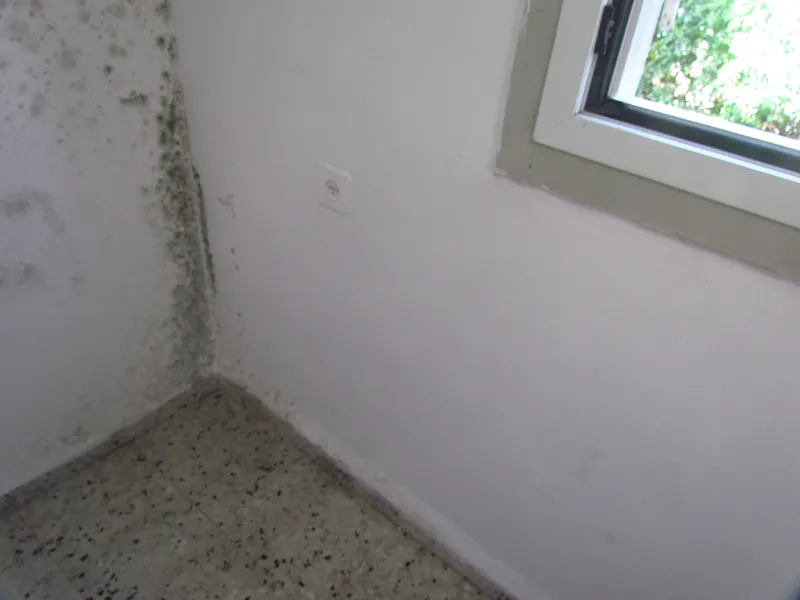
A water damage smell is a damp, earthy, stale odor, like a wet towel left in a gym bag. It means something in the building is wet or has been wet for a while. The smell often shows up before any stain does, and it tends to be strongest in a closed room.
Think of the smell as a pointer, not a diagnosis. It tells you moisture is present and nothing more. Finding the wet material is the real job.
A few common variations help narrow the search:
- Earthy and musty usually means wet drywall, insulation, carpet pad or wood.
- Sour or mildewy points to cloth, upholstery or a damp laundry area.
- Rotten egg or sewer points to a drain, trap or sewer line rather than a wet wall.
The signs of water damage guide covers the visual clues that tend to go along with an odor.
Does a musty smell mean there is mold?
Not necessarily, but the two often go together. A musty odor means moisture is in the air or in a material, and mold needs that moisture to grow. You can have the smell without visible mold, and you can have mold you cannot smell. Treat the smell as a reason to look.
Per the CDC, exposure may bring on congestion, throat irritation, a cough, wheezing or itchy eyes, and anyone with asthma or a mold allergy can have a severe reaction. The California Department of Public Health lists a mold odor among the warning signs in its booklet on dampness and mold for renters.
The mold after water damage guide explains what to do when a patch is visible.
What do different smells point to?
Different odors lead to different places. Use the table as a starting guess, then confirm with your eyes and a moisture reading. A smell that matches none of these rows, or that is faint and moves around the house, is still worth tracking down because the source may be well hidden.
| Smell | Likely source | What to do |
|---|---|---|
| Earthy, damp, like wet cardboard | Wet drywall, insulation or carpet pad behind a leak | Find the leak, open the area and dry it |
| Stale and sour near vents | Moisture in the air handler or ducts, or a clogged condensate line | Check the drain line and pan, call an HVAC technician |
| Rotten egg or sewer | Dry floor drain trap, loose toilet seal or a sewer problem | Run unused drains for a minute, then call a plumber if it lingers |
| Musty only in one cabinet | Slow drip at a supply line or drain under a sink | Empty the cabinet and look for moisture |
| Musty after every rain | Roof, window or wall leak that only opens in wet weather | Read the roof leak guide |
Why does the house smell musty after the air conditioner runs?
A musty smell tied to the air conditioner usually means the condensate drain has clogged or the pan under the air handler holds standing water. The system pulls moisture out of the air and sends it down a drain line. When that line clogs, water sits and smells, then spills.
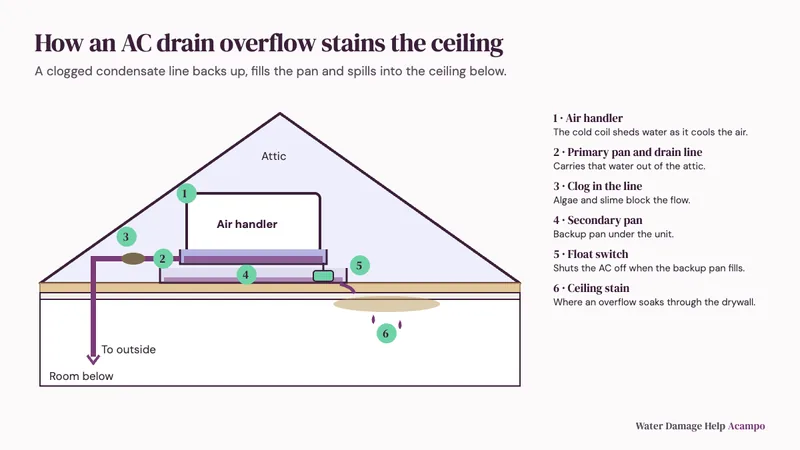
A yearly tune-up should include the condensate drain, according to ENERGY STAR, which warns that a blocked drain may damage the home and push humidity up. It also suggests checking filters monthly.
The AC leak page shows how the damage develops and what a provider looks for.
Can a pipe under the floor cause a musty smell?
Yes. A slow leak from a pipe below the floor can dampen the subfloor and whatever sits above it for weeks, and the smell rises through the flooring. Which kind of foundation your house has decides where to look, and Acampo's records do not tell us, so check your own.
On a slab, look for a warm floor spot, a hissing sound or a water meter that keeps moving with everything shut off. With a crawl space, the clue is damp insulation or a stale odor drifting up from the vents. A high water bill is another clue, covered on the high water bill page.
Underground pipe work is a plumber's job. Once the leak is fixed, ask a restoration provider about drying what got wet.
Why does covering up the odor not fix it?
Sprays and plug-in fresheners hide the smell for a few hours while the damp material keeps feeding it. The odor is a symptom of moisture, and moisture is the cause. Until the material is dry or removed, the smell returns, and mold may grow under the cover-up.
The EPA says not to paint or caulk moldy surfaces, since the mold will keep growing underneath. Fresh paint on a damp wall fails the same way.
The EPA separately recommends getting wet areas and belongings dry in the first 24 to 48 hours so mold does not take hold. Faster drying means a faster end to the odor.
How do I find where the smell is coming from?
Work from the strongest spot outward, checking one suspect at a time. Smell is a poor map because odor spreads through a house, so confirm each guess by touch, by sight or with a moisture meter before taking anything apart. These steps work in most homes.
- Mark the strongest spot by noting which room and which wall or floor area the odor peaks near.
- Check water-using spots nearby: under sinks, behind the toilet, around the washer and the water heater.
- Press on drywall and baseboards. A soft or cool area is wet.
- Look up. Check ceilings below bathrooms, and around the air handler and any roof penetrations.
- Watch the water meter with every fixture off. Movement means a hidden leak.
- Ask for readings. A restoration provider with a moisture meter can confirm which materials are wet.
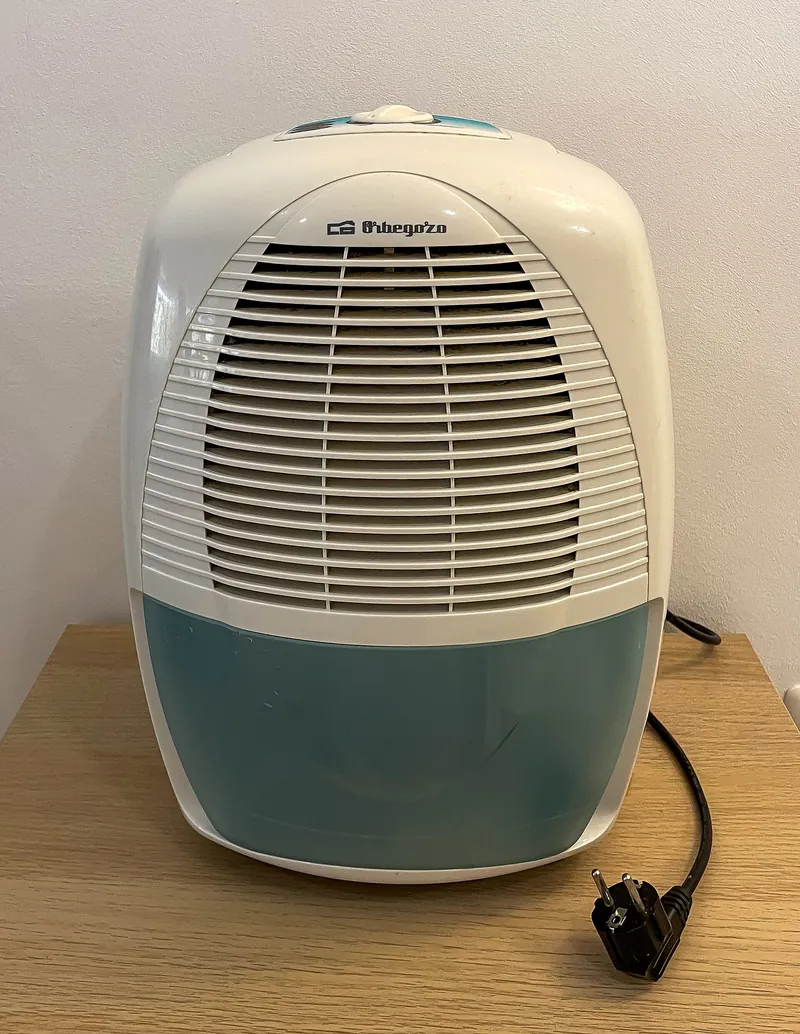

The EPA puts a basic humidity meter at roughly $10 to $50 and wants indoor readings under 60 percent, ideally between 30 and 50. A reading well above that backs up a moisture problem. See renting a dehumidifier versus hiring a professional to compare options.
Is a sewage smell dangerous?
It can be. A sewer odor can come from a dry drain trap, which is harmless, or from sewage backing up, which is not. IICRC S500 classes sewage and rising flood water as Category 3, the most contaminated class, so treat a persistent sewer smell with caution and keep children and pets away.
Run water for a minute in sinks, tubs and floor drains that go unused, since a dry trap lets sewer gas through. If the smell stays, or water backs up, stop using the drains and call a plumber.
For sewage or other contaminated water, the EPA's advice is to hire someone experienced with that kind of building damage. The sewage backup page lays out what comes next.
Why does the smell come back after I cleaned?
A returning smell means moisture is still present in a place the cleaning did not reach. Surface cleaning handles what you can see. Water that soaked into insulation, a carpet pad or the bottom of a wall keeps releasing odor until it is dried or removed.
The CDC suggests pulling out soaked carpet and upholstery that cannot dry quickly. For hard surfaces it allows soap and water, or at most a cup of household bleach per gallon of water, and it warns against ever combining bleach with ammonia or other cleaners.
If you cleaned and the smell returned within a few days, assume a wet layer remains. Wet carpet and pad is a frequent culprit.
When should I call a restoration provider about a smell?
Call when the smell lasts a day or two after the leak is stopped, when you find wet materials, or when sewage or flood water is involved. Mold size matters too. The EPA says that if a moldy area is under about 10 square feet, you can usually handle it yourself, so a larger patch calls for help.
California has no licensing for mold remediators, according to the California Department of Public Health, so ask each provider what training and equipment they use, and request moisture readings in writing. Restoration teams differ, and the guide to choosing a restoration company lists questions to ask.
If anyone in the home has asthma or allergies, the allergies after water damage page explains why to act sooner.
Sources: IICRC, S500 standard; CDC, mold and health; EPA, mold cleanup; EPA, brief guide to mold and moisture; CDPH, Frequently Asked Questions about Mold; CDPH, Dampness and Mold for Renters in California; ENERGY STAR, Maintenance Checklist.