The short version
A high water bill leak often shows on the meter: shut off all water use, and if the meter still moves, you probably have a leak, says the EPA. Check toilets, the water heater, appliance hoses, irrigation and pipes in walls. Dry any damage in 24 to 48 hours to prevent mold.
Why is my water bill so high, and could it be a leak?
A sudden jump with no change in how much water you use is a classic leak sign. Check the meter before you check anything else. The EPA's WaterSense program says that if the meter moves at all while no water is being used, you probably have a leak somewhere.
Bills also rise for ordinary reasons: more people at home, a new irrigation schedule, filling a pool or a rate change from the utility. Compare the bill with the same season last year, and look for a meter that moves with everything off.
This site cannot find your leak. We can show how to narrow it down and when to call a plumber or a restoration provider.
How do I read my meter to find a hidden leak?
Turn off every tap, appliance and irrigation timer, note the meter reading, wait a while without using water, and read it again. If the numbers or the small leak dial moved, water is escaping somewhere. A steady, unchanged reading points away from a leak.
- Stop all use. Close taps, pause the dishwasher and washer and check that no one flushes.
- Find the meter. It is usually in a box near the curb or street. Lift the lid with care.
- Note the reading and any small dial or triangle that spins on low flow.
- Wait with everything off, then read again.
- If it moved, shut the main valve at the house and check again. A meter that still moves after the shutoff means the leak is ahead of the house valve.
The EPA's Fix a Leak Week page gives the basic meter check. Your water provider can tell you who owns the line from the meter to the house, which affects who pays for repairs.
Where do hidden leaks usually hide?
Most start in a few places: toilets, supply lines, irrigation, water heaters, appliance hoses and pipes in walls or under floors. Many leak without a visible puddle. Work through the list and use the meter test between steps to see which fix changed the numbers.
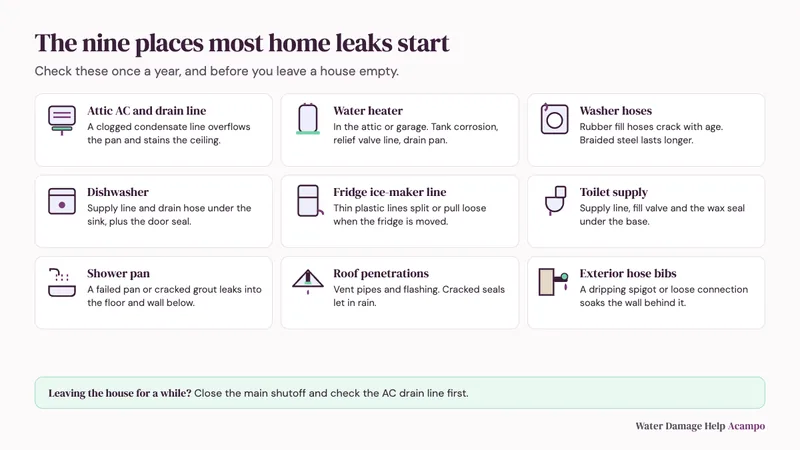
| Place to check | How to test | Related page |
|---|---|---|
| Toilets | Add food coloring to the tank and wait without flushing. Color in the bowl means a leak | Toilet supply lines |
| Water heater | Look for dampness or rust at the base and around the fittings | Water heater leaks |
| Appliances | Pull out the washer, dishwasher and fridge and look at hoses and floors | Appliance leaks |
| Irrigation and hose bibs | Turn on each zone and look for soggy ground, hissing and wet spots | Prevention guide |
| Pipes in walls and floors | Look for stains, warm floor spots and the sound of running water | Slab leak and burst pipe |
Pages for each: toilet supply line failures, water heater leaks and appliance leaks.
How much water can a small leak waste?
More than most people expect. In EPA figures, one drip a second adds up to over 3,000 gallons in a year, and an irrigation leak about as thick as a dime (1/32 of an inch) can lose roughly 6,300 gallons in a month. A hidden leak runs day and night.
WaterSense also estimates that repairing easy household leaks saves about 10 percent on a water bill, and offers a rough check: a family of four that uses above 12,000 gallons in a colder month may have serious leaks.
Those figures come from the EPA's national guidance, not from Acampo utility records. Your own meter and your own bill are the better test for your house.
Could the leak be inside a wall, ceiling or floor?
Yes, and it is the harder kind to find. Water that escapes inside a wall or under a floor shows up late, as a stain, peeling paint, a warped floor or a musty smell. A rising bill with no visible leak can be the first warning.
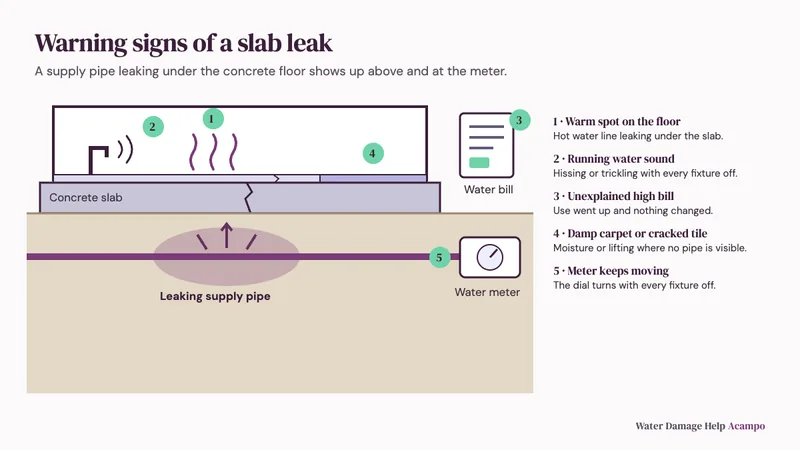
We do not know what foundation your house has, so read this as advice rather than a fact about homes here. If your home sits on a slab, see slab leak water damage. For stains and spots, signs of water damage lists what to look for.
Photograph any stain before you touch it, and mark its edge with a pencil. If it grows, the leak is active.
Could high water pressure cause the leaks?
It can wear out fittings, hoses and valves over time. The Department of Energy's Building America Solution Center says most plumbing codes call for a pressure reducing valve where supply pressure goes above 80 psi, and that higher pressure can rupture pipes and damage fixtures. Pressure is worth checking if leaks keep returning.
The City of Tustin's guide says most plumbing professionals recommend a pressure reducing valve setting between 35 and 60 psi, and that sustained pressure above 80 psi can damage on-site plumbing. The EPA's WaterSense home specification sets a limit of 60 psi static pressure.
A plumber can test your pressure with an inexpensive gauge on a hose bib. Do not adjust a pressure valve yourself without guidance, since a wrong setting can cause new problems.
Who is responsible for the leak and the bill?
It depends on where the leak is. In many places the utility looks after the line up to the meter and the owner looks after the pipes beyond it, but rules differ by water provider. Ask yours who owns which section and whether it offers any leak adjustment on a bill.
For a leak inside the house, your homeowners policy may cover sudden water damage, and may not cover the cost of the water itself or the repair of the worn pipe. Triple-I explains that damage from poor upkeep is excluded, while standard forms name accidental discharge or overflow from plumbing and appliances.
Renters should tell the landlord in writing right away. Read renters and landlords for California rules on repairs. Our insurance claims page covers how to report a loss.
What should I do once I find the leak?
Shut off the water to the leaking fixture or the main valve, then limit the damage and call the right person. The California Department of Insurance advises owners to find and stop leaks at the source, and warns that delay in cleanup can result in mold growth. Speed matters.
- Stop the water. Close the fixture stop or the main shutoff.
- Photograph the leak, the damage and the meter reading.
- Dry what is wet. The EPA's moisture guide sets a target of 24 to 48 hours.
- Call a plumber to repair the pipe or fixture.
- Call your insurer if there is damage, and keep receipts.
- Call a restoration provider if walls, floors or ceilings are wet.
Our burst pipe guide shows where the main shutoff usually sits and how to use it.
What if the leak has already damaged the house?
Then the bill is only part of the cost, and drying comes next. Wet drywall, insulation, flooring and cabinets can hold moisture for days after the pipe is fixed. A plumber stops the leak, but does not dry the structure. That is a separate job for a restoration provider.
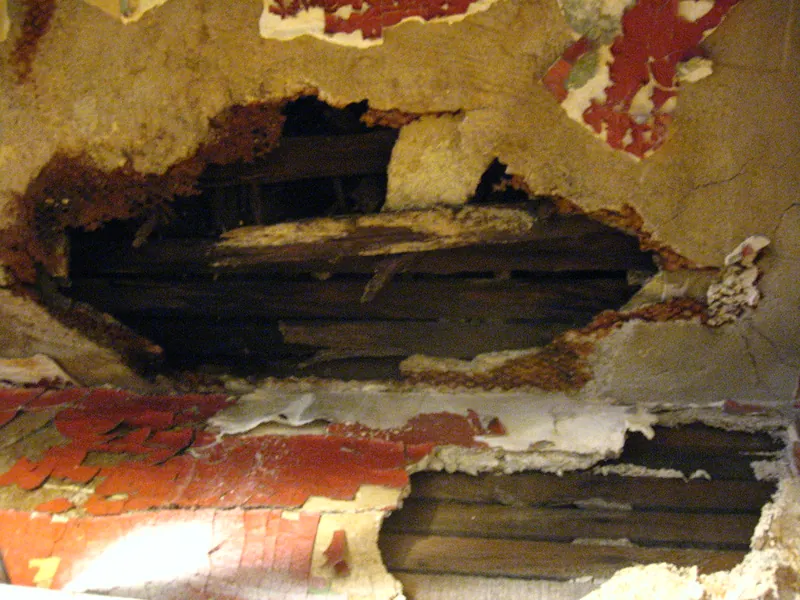
Read water damage repair and ceiling water damage repair for what comes after drying. Restoration teams differ in what they handle, so confirm directly what each does before you agree to anything.
For a plan to catch leaks early, see the water damage prevention guide.
How can I catch the next leak sooner?
Read the meter now and then, check the bill each month and look under sinks and around appliances on a schedule. Per the EPA, leak detection and flow monitoring devices can spot leaks or flag odd water use, which can limit the damage before a stain appears.
- Read the meter at the same time each month and keep a note.
- Compare bills to the same month last year.
- Check under sinks and behind toilets when you clean.
- Consider a leak sensor or flow monitor for the water heater and washer.
- Learn where the main shutoff is and test it once a year.
Browse every water damage guide, or see the state site, Water Damage Cleanup California.
Sources: EPA WaterSense, Fix a Leak Week; DOE Building America Solution Center, Service Water Pressure; City of Tustin, High Water Pressure; California Department of Insurance, Residential Property Claims Guide; Triple-I on covered disasters; EPA guide to moisture in the home.