The short version
In the flood insurance vs homeowners insurance question, homeowners policies cover sudden leaks and some storm damage but not flood, which needs a separate policy that starts 30 days after purchase. Photograph each water source, call your agent, and dry the home while coverage is sorted out.
What is the difference between flood insurance and homeowners insurance?
Homeowners insurance covers many kinds of water damage but not flood. Flood insurance is a separate policy that covers rising water from outside. When comparing flood insurance vs homeowners insurance, the question that matters is where the water came from, not how much of it there is.
The California Department of Insurance (CDI) draws the line this way: a homeowners policy leaves out flood but pays for other water losses. Triple-I adds that you buy flood cover from the National Flood Insurance Program (NFIP) or one of a few private insurers.
This site is a water damage information resource, not an insurance agency. Policies differ, so the wording of yours decides what is paid. Use this page to ask better questions of your agent.
Which water events does each policy usually cover?
Sudden leaks from inside the house usually land on the homeowners policy, while water that arrives from outside on the ground usually does not. The table shows common patterns, based on what the CDI, Triple-I and the NAIC say. Your policy and your insurer have the final word.
| Water event | Homeowners policy | Flood policy |
|---|---|---|
| Pipe, water heater or appliance discharge | Often covered as accidental discharge, if not from neglect | Not the usual purpose |
| Rain through a roof hole made by wind | May be covered if the cause is a covered one | No |
| A creek, river or canal overflowing into the house | Not covered | Covered if you have the policy and the loss qualifies |
| Ground water or rain runoff seeping in | Not covered, per the NAIC | Depends on the policy terms |
| Sewer backup | Not covered unless you added an endorsement | Not covered, per Triple-I. See sewage backup cleanup |
Mold adds a wrinkle. Neglected upkeep and mold are excluded, Triple-I says, and the NAIC notes that homeowners policies often leave out mold costs.
Does homeowners insurance cover storm water that gets inside?
Sometimes. Rain that enters through a hole in the roof or a broken window can be covered when strong wind or another covered cause made the hole. Water that rises or flows across the ground and then enters is treated as flood or runoff, which standard policies exclude.
Per the NAIC, a plumbing or roof leak is typically a covered loss, while ground water, rain runoff and snow-melt are not. One storm can bring both, and that is where claims get split.
Photos matter here. A dated picture of a ceiling stain under the roof and a separate picture of a wet floor at the door tell the adjuster two different stories. The roof leak and storm water damage guide covers the roof side, and flood cleanup covers the ground side.
How do I buy flood insurance, and when does it start?
Ask your insurance agent, or call the NFIP Help Center at 1-877-336-2627 for agent contacts. A new flood policy waits 30 days before it starts, the CDI explains, unless a federally regulated lender requires cover in a designated high-risk area. You cannot buy it as a storm arrives.
The NFIP covers direct physical loss from a flood, and the CDI does not regulate it. NFIP claims go to 1-800-638-6620.
Few California homes carry it. A CDI working group on climate and insurance counted 227,000 California homes with NFIP flood policies in September 2019, under 5 percent of the state's homes. It also found that fewer than half of the homes at relatively high flood risk are insured for it.
FEMA says most homeowners insurance does not cover flooding, so assume yours does not unless your agent says otherwise.
How much flood risk is there near Acampo?
Acampo sits in San Joaquin County, which Wikipedia describes as a very flat basin with an exceptionally high water table that tends to flood in spring with Sierra snowmelt. Risk differs from one address to the next, so look up your own property rather than relying on the county as a whole.
The Mokelumne River runs past Lodi. Pardee Dam sits several miles upstream, and Camanche Dam, built below it in 1963, has flood control for downstream communities as its primary purpose, per Wikipedia. Dams reduce risk but do not remove it.
Winter storms add to it. In the West Coast states, NOAA reports, a few atmospheric rivers deliver roughly 30 to 50 percent of the year's precipitation.
The creek and river flooding page explains how to check your address, and atmospheric river prep covers getting ready. County context is on the San Joaquin County page.
What should I do if I am not sure whether it is a flood loss?
Treat it as both until an adjuster says otherwise. Protect the home, document each source of water separately and report the loss to every insurer that might be involved. Do not wait to sort out coverage before you start drying, because mold does not wait.
- Stay out of moving water. Ready.gov warns that six inches can knock you down and a foot can carry a vehicle off.
- Stop any inside source, such as a pipe or appliance, if it is safe to reach.
- Photograph and video each room, the water line and the way water entered.
- Call your agent about the homeowners policy, and ask about any flood policy you hold.
- Save receipts for temporary protection and emergency drying.
- Keep damaged items until the adjuster has seen them, as Triple-I advises.
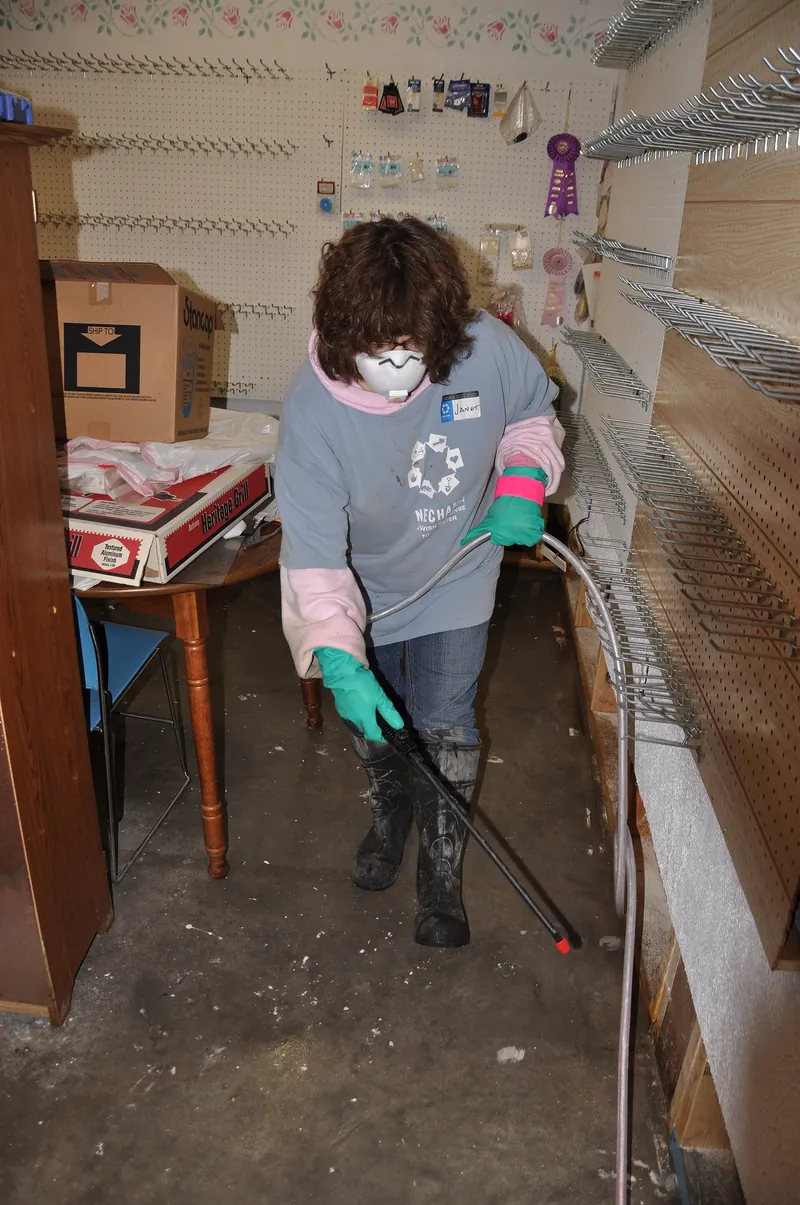

IICRC rates rising flood water from rivers and streams as Category 3, grossly contaminated. For contaminated water, the EPA recommends a professional who knows how to handle it in buildings.
What deadlines and rights apply to a claim in California?
State regulations put insurers on a clock. Section 2695.5(e) of Title 10 requires an acknowledgment within 15 calendar days of notice. Section 2695.7(b) requires accepting or denying within 40 calendar days after proof of claim, and a denial must be written with its reasons.
A written denial must also tell you the Department of Insurance can review it. An insurer that needs longer must send written notice inside the 40 days, then every 30 days after. The CDI's consumer line is 1-800-927-4357.
These rules apply to insurers regulated by the state. NFIP claims follow federal procedures, so call the NFIP number above for those. The water damage insurance claims guide goes step by step through the process.
What if my claim is denied or split between two policies?
Ask for the denial in writing, read the reasons and compare them with your policy language. Then contact the agent or the claims department manager. Many policies allow an independent appraisal, Triple-I says: each side names an appraiser, and the two pick an umpire.
Keep your photos, invoices and any written bids in one folder. Triple-I advises written bids from licensed contractors with materials and prices line by line. A complaint to the CDI, online or by phone, is also an option when you disagree with how a claim was handled.
If your home was flooded in the past, see how that affects a sale in disclosing water damage when selling. All of the guides are in the Acampo water damage guides hub.
Sources: CDI, Flood Insurance Resources; CDI, Residential Property Claims Guide; CDI, Climate Insurance Working Group report; CDI, complaint page; Triple-I, which disasters are covered; Triple-I, settling claims; NAIC consumer page on homeowners coverage; Title 10 CCR section 2695.5; Title 10 CCR section 2695.7; FEMA, Don't have flood insurance; Ready.gov, Floods; IICRC, the S500 standard; EPA, mold cleanup; NOAA Research, atmospheric rivers; Wikipedia, San Joaquin County; Wikipedia, Mokelumne River.