The short version
A toilet supply line leak keeps flowing under pressure until you close the shutoff valve below the tank or the main valve. Close it, photograph the damage, keep the failed line and dry wet flooring in 24 to 48 hours as the EPA advises. Then call a plumber and, if floors are wet, a provider.
What is a toilet supply line and why does it leak?
The supply line is the short flexible hose or tube that carries water from the shutoff valve at the wall or floor to the toilet tank. It stays under pressure all day. A small crack or a loose fitting can drip for weeks, or the line can let go and flood the room.
Lines can fail at the nut where they join the valve or the tank, along the hose itself, or at the valve behind them. Age, movement from cleaning and a nut that was never tightened properly are all plausible causes. None of the sources used here gives a failure rate, so treat any brand claim with caution.
This page is for homes in and around Acampo. A call here reaches a local water damage restoration team. A plumber fixes the line, and a restoration team dries what got wet.
How can I tell the supply line is leaking?
Look for water where there should be none: a wet patch behind the toilet, a damp cabinet floor beside it, drops forming on the connection or a soft floor near the base. Dry the line with a paper towel and check again in a few minutes. New moisture points to the line.
| What you notice | Likely source | Quick check | Next step |
|---|---|---|---|
| Drops on the line or valve | A loose or worn connection | Wipe dry, watch for new beads | Close the valve and call a plumber |
| Damp floor behind the toilet | Supply line, valve or tank | Place a dry tissue under each joint | Shut the valve and find the wet joint |
| Toilet runs or refills on its own | A tank leak, such as a worn flapper | Food coloring in the tank, wait 10 minutes | Follow the EPA dye test below |
| Ceiling stain in the room below | Water has reached the floor structure | Shut the water first, then look at the ceiling | Photograph and call for drying |
The EPA says to find toilet leaks by dropping a few drops of food coloring into the tank. If color shows up in the bowl after 10 minutes, the tank is leaking. That test finds flapper leaks, not supply line leaks, so use both checks.
How do I stop the water at the source?
Turn the small shutoff valve below the tank clockwise until it stops. If it will not turn, close the main shutoff for the house instead and do not force the valve. Then mop up standing water and photograph the damage before you move anything.
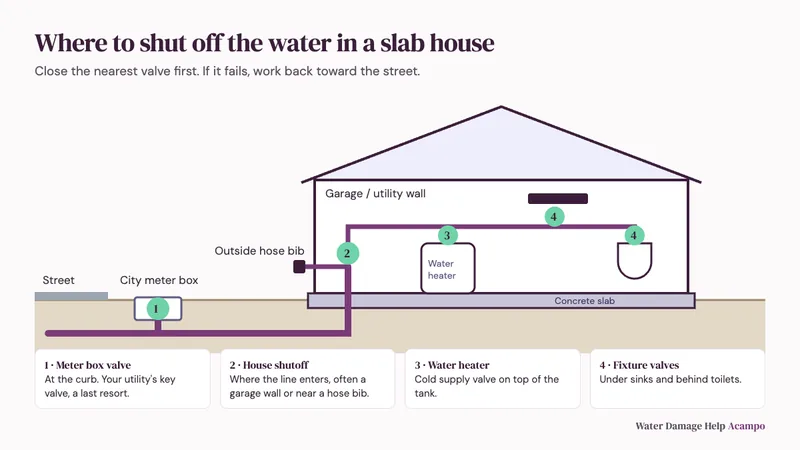
- Close the fixture stop. It is the oval or round handle where the line leaves the wall or floor.
- Close the main shutoff if the stop fails. The prevention guide shows where main valves usually sit.
- Keep clear of wet electrical equipment. Ready.gov says not to touch it when it is wet or when you are standing in water.
- Flush once. This empties the tank so you can see whether the leak has stopped.
- Soak up the water. Use towels, then move rugs and cabinet contents out of the wet zone.
- Photograph everything. Take pictures before cleanup, following the photo checklist.
- Keep the failed line. Triple-I advises keeping damaged items until the adjuster has been, and a split hose is evidence.
The California Department of Insurance wants leaks found and stopped at their source without delay. A closed valve and a dated note of when you closed it document that step.
How much damage can a failed supply line cause?
A lot, because the line is pressurized and keeps flowing until someone shuts it off. A drip behind a toilet can soak flooring and the subfloor below it, and a split line can flood a bathroom quickly. The longer it runs, the farther the water travels.
IICRC S500 lists a supply line leak as Category 1, clean water. That is the best starting category, but it does not stay that way: the longer wet materials sit, the more the risk grows. Dry materials quickly to keep a clean-water loss from becoming something worse.
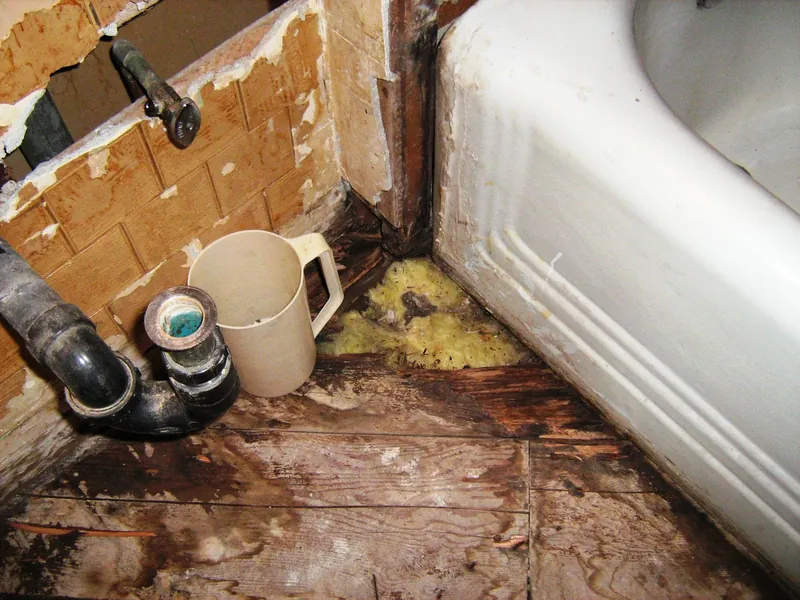

Check the cabinet floor beside the toilet, the baseboard, and the floor covering. If the bathroom is above another room, check the ceiling beneath it. The bathroom and kitchen water damage page describes what water does to vanities, subfloors and drywall.
How fast does the area need to dry?
Aim to dry wet materials in the first 24 to 48 hours. The EPA says that drying water-damaged areas and items within that time prevents mold growth in most cases. Bathroom floors stay damp because airflow is poor and moisture hides under flooring.
For indoor humidity, the EPA's goal is under 60 percent, and 30 to 50 percent is better. A fan, an open window and a dehumidifier all help. The rental dehumidifier page explains when that is enough.
Pull up wet vinyl and carpet when you can do it safely. Hidden moisture under flooring is the usual reason a small loss grows. If you see warped boards, soft spots or a musty smell later, read about water damaged floor repair.
Can I replace the supply line myself?
Many homeowners do, but only after the water is off and only if the shutoff valve holds. If the valve drips when closed, will not turn or shows corrosion, call a plumber, since forcing it can snap the stem and cause the flood you are trying to prevent.
The CSLB says an unlicensed person may complete small projects up to $1,000 without a contractor license if they do not hire workers and no building permits are needed. That limit covers labor and materials combined. Renters should not repair a landlord's plumbing without asking, because the landlord is responsible for it.
Whoever does the work, tighten connections firmly, but not so hard that you crack a fitting. Run water, then check each joint with a dry tissue. Check again a day later.
Does insurance cover a failed supply line?
Often, for the sudden part. Triple-I lists accidental discharge or overflow of water from plumbing among the named perils on standard forms, and NAIC says damage from a home's plumbing is typically covered. Triple-I adds that damage from poor upkeep is excluded.
That split matters here. A line that failed suddenly may be treated differently from one that dripped for months, so fix leaks when you find them and note the date.
Triple-I data show how common such losses are. Roughly one insured home in 60 files a water damage or freezing claim in a year, and the average claim for 2019 to 2023 was $15,400.
For renters, California Civil Code section 1941.1 lists plumbing that conforms to law and is maintained in good working order as a basic feature of a livable dwelling. See the renters and landlords page, and the claims guide for the process.
How do I prevent a repeat?
Look at the line and valve every few months and after anyone works near the toilet. The EPA suggests examining pipe fittings for water on the outside of the pipe to find surface leaks, and checking your water meter before and after two hours when no water is used. If it moves, there is a leak.
The EPA also says a family of four that uses more than 12,000 gallons per month in a cold month such as January or February may have serious leaks. Pair that with a look at the high water bill page.
The EPA says WaterSense has a guide to leak detection and flow monitoring devices, which can alert you to irregular water use. The appliance leak page lists other hoses to inspect, such as the washer and dishwasher lines.
When should I call a restoration provider?
Call when water has reached the floor, walls or a ceiling below, or when you cannot dry the area in 24 to 48 hours. A plumber stops the leak, and a restoration provider measures moisture and dries what was soaked.
Each provider handles different work and has its own timing, so confirm directly. Ask for moisture readings and photos. Terms are set by the provider, not by this site.
For the full process, read about water removal and structural drying. The guide index lists related topics.
Sources: EPA WaterSense, Fix a Leak Week; EPA, mold and moisture guide; IICRC S500; Triple-I, which disasters are covered; Triple-I, homeowners and renters insurance statistics; Triple-I, settling claims; NAIC, homeowners insurance; California Department of Insurance, Residential Property Claims Guide; CSLB press release 24-21; Ready.gov, Floods; Civil Code 1941.1.