The short version
A skylight leak usually starts at the flashing or seal, not the glass. Catch the water, keep clear of a bulging ceiling, photograph the damage and report it to your insurer. Dry the ceiling and shaft in 24 to 48 hours, then have the source fixed so it does not return.
How can I tell if my skylight is leaking?
A skylight leak shows up as water on the ceiling or wall near the opening, usually during or after rain. Look for stains, bubbling paint, drips at the frame and wet insulation in the shaft. Compare what you see with the clues below before you call anyone.
| What you see | What it can mean | Next step |
|---|---|---|
| Drip at the frame only when it rains | Water getting past the seal or the flashing around the opening | Note the date and rain, then have a roofer look |
| Stain several feet from the skylight | Water running along framing or insulation before it shows | Check the attic, if safe. See ceiling water damage repair |
| Droplets on the glass on cold mornings | Condensation, not a roof leak | Wipe it and watch whether it returns on dry days |
| Brown ring that grows after each storm | A repeating leak that is still active | Photograph it after each storm and book a repair |
| Musty smell near the shaft | Damp material that has not dried | Open and dry the area. See mold after water damage |
Only a close look from a roofer, a glazier or a drying provider can say which row fits. Use the table to describe the problem when you call.
Where do skylights usually leak?
Most skylight leaks start where the unit meets the roof, not through the glass itself. The flashing, the seal around the frame, the curb and any cracked glazing are the usual suspects. A roofer can test each one, and the answer decides who does the repair.
Wear and age matter too. Sealant dries out, flashing lifts and movement in the roof opens small gaps. After years of sun and rain, a joint that held can start to weep.
Leaks also travel. Water entering at the top of the shaft can run down insulation and framing and surface a few feet away, so a stain beside the skylight does not always mean the skylight is the source. The roof leak and storm water damage guide covers other roof entry points.
What should I do the moment water comes through the ceiling?
Protect people and belongings first, then slow the water. Move furniture, catch drips and keep clear of any bulging ceiling, and switch off power below a heavy leak. Do not climb onto a wet roof to fix it yourself, and work through the steps in order.
- Move people and valuables out from under the wet area.
- Put a bucket under the drip and a tarp or plastic under the bucket.
- Turn off power to wet fixtures if you can reach the switch without standing in water.
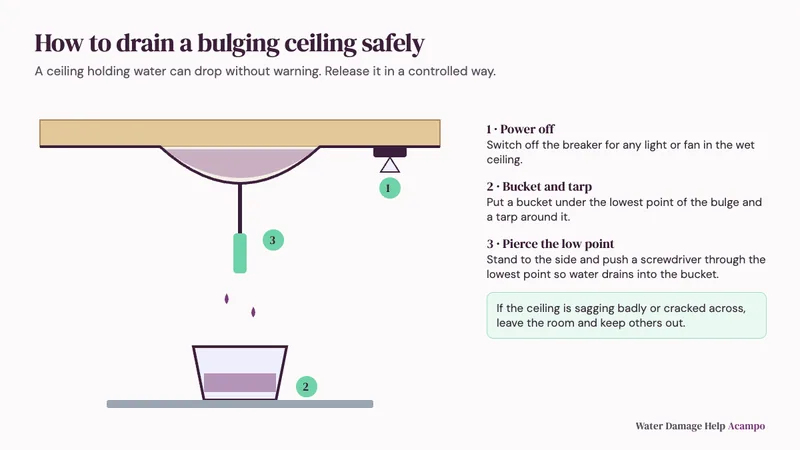
- Drain a bulging ceiling safely at its lowest point, as the diagram below shows.
- Photograph the ceiling, the skylight and the sky with the date.
- Cover the opening from above only if a professional can do it safely, or wait for a dry spell.
Find and stop the leak at its source as soon as you can, advises the CDI. Its claims guide calls temporary repairs, such as plastic sheeting or plywood over an opening, among the most important steps.
Is it a leak or just condensation?
Condensation forms when warm, damp indoor air meets cold glass, so it shows up as fine droplets on cold mornings and clears as the day warms. A leak drips when it rains and leaves stains that grow. Wetness on a dry day points to condensation.
Wikipedia describes the Lodi area as having cool, wet winters, often with dense ground fog, and hot, dry summers. Cold winter mornings and a damp house can produce plenty of condensation without any leak at all.
Cooking, showers and drying laundry indoors add moisture. The EPA's target for indoor humidity is under 60 percent, ideally 30 to 50 percent. A cheap hygrometer will tell you where you stand, and a vented bathroom fan or an open window helps.
If the glass is dry and the ceiling is still stained, treat it as a leak. If you are unsure, photograph the ceiling and glass during the next rain and compare.
Does homeowners insurance cover a skylight leak?
It can, depending on the cause. Roof-leak damage is typically covered, the NAIC explains, but ground water and rain runoff are not. The CDI adds that rain through a hole made by wind or another covered cause may be covered, so read your own policy.
Wear is the sticking point. Triple-I notes that damage from neglected upkeep, mold or pests is excluded, since upkeep is the owner's job. A skylight whose seal has simply aged may not be treated like one broken by a storm.
Report the damage to your agent right away, as the CDI advises, and keep receipts for temporary protection. Triple-I says big permanent repairs should wait for the adjuster. Photos taken before and after help either way.
The insurance claims guide walks through the paperwork, and the photo checklist shows what to capture.
How fast does a wet ceiling need to dry?
Aim for 24 to 48 hours, the window the EPA gives for drying wet areas and items before mold takes hold. Wet insulation in the skylight shaft can hold water well after the drip stops, so the ceiling can feel dry while the cavity above it is not.
The CDI warns that delay in cleanup can allow mold to grow, and that drying and dehumidifying wet areas can help. A restoration provider can measure moisture in the ceiling and shaft rather than guessing. Restoration teams differ, so confirm what each one measures and records.
Small mold patches under about 10 square feet can often be handled by the owner, per the EPA. Do not paint or caulk over mold. People with asthma or mold allergy can have strong reactions, the CDC says, so keep them away from the work.
Who fixes a skylight and the ceiling below it?
Usually two kinds of provider are involved. A roofer or glazier fixes the skylight, flashing or seal, and a drying or repair provider handles wet insulation, drywall and paint. Fix the source first, because drying a ceiling under a leaking skylight only buys time.
This site is not a roofer. A call reaches a local water damage restoration team for the wet ceiling, and the team confirms what it does and does not handle. For the rebuild afterward, see drywall water damage repair.
Check contractors yourself. The CSLB says the license threshold is $1,000 for labor and materials combined, and its consumer guide limits a home improvement down payment to the lesser of $1,000 and 10 percent of the contract price. Pay as work is completed, not before.
How do I keep skylight leaks from coming back?
Inspect after storms and fix small gaps early. In the West Coast states, a few atmospheric river events bring roughly 30 to 50 percent of the year's precipitation, NOAA reports, so one big storm can test a roof hard. Check the ceiling after each one.
Look at the skylight from inside after rain and note any new stain, drip or smell. Keep gutters and the roof around the unit clear of debris so water drains away. Have a roofer check seals and flashing before the wet season, not during it.
Keep photos of every repair. They help with insurance and, someday, with a sale. The atmospheric river prep page covers getting a home ready, and the Acampo water damage guides hub has the rest.
Sources: NAIC, Homeowners Insurance; CDI, Residential Property Claims Guide; Triple-I, which disasters are covered; Triple-I, settling claims; EPA, mold and moisture in your home; EPA, mold cleanup; CDC, About Mold and Your Health; NOAA Research, atmospheric rivers; CSLB, handyperson exemption; CSLB, home improvement contracts guide; Wikipedia, Lodi, California.